
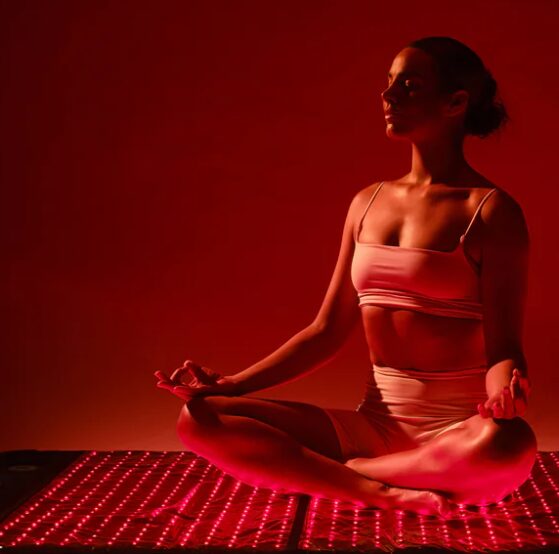
Can light help us heal? From infrared to red light and beyond, we’re living in an era where light-based wellness devices are becoming part of our everyday routine. But where did the idea for these technologies come from and is there real evidence to support their claims? Companies like HigherDose are leading this revolution, but how do light therapies work?
In the beginning, there was light—sunlight, streaming down to fuel the beginnings of life on Earth. Ancient civilizations instinctively revered the sun’s rays for their life-giving warmth and healing power. Today, science has rediscovered what we once took for granted: light can heal. In particular, red light and infrared therapy have emerged as gentle yet powerful tools for health and wellness.
In ancient Egypt, India, and Greece, sunlight was more than a source of illumination; it was considered a form of medicine. The practice of heliotherapy – healing with sunlight – was used to treat skin diseases and other ailments. The Greek temples of Heliopolis used gems and prisms to break sunlight into colors, believing each hue had therapeutic effects. Such was the faith in the sun’s healing powers that even Hippocrates himself extolled the virtues of “direct sunlight” for the sick. In these early chapters of history, light itself was a revered healer, and the color red – the gentle light of sunrise and sunset – symbolized life and vitality.
Fast-forwarding to the 19th century light therapy moved from intuition to investigation. In the late 1800s scientists observed that sunlight could fight infections. In 1877, natural light was found beneficial against anthrax bacteria, and by 1890, doctors were using sunlight to treat rickets. Visionaries, like Denmark Niels Ryberg Finsen, began experimenting with concentrated light for medicine. Dr. Finsen’s pioneering work showed that certain wavelengths could treat disease – most famously, he treated patients with lupus vulgaris using intense light. His innovations earned him the 1903 Nobel Prize in Medicine for phototherapy, after he demonstrated that ultraviolet light could heal tuberculosis skin lesions and that red light could help smallpox patients by preventing scarring. Finsen’s success firmly planted light therapy into the soil of medical science, turning what once seemed like mystical sun worship into a legitimate medical treatment.
By the 1930s, light therapies (including early infrared and ultraviolet treatments) were widely used, but the real renaissance of light therapy began with an unexpected discovery in a Hungarian laboratory. In 1967, physician Endre Mester was testing if a low-powered ruby laser might cause cancer in mice. It didn’t – but to his surprise, the mice exposed to the soft red laser light grew hair faster on shaved spots and their wounds healed more quickly. These findings marked the birth of low-level laser therapy (later known as photobiomodulation). Dr. Mester had accidentally demonstrated that certain frequencies of light could stimulate biological healing processes instead of damaging tissue. Red light, it turned out, was coaxing cells to repair and regrow. In the decades that followed, researchers around the world began experimenting with this gentle “cold” laser therapy for wound healing, pain relief, and skin rejuvenation.
Another technology was also on the rise: the light-emitting diode, or LED. These tiny bulbs could produce specific wavelengths of light without intense heat. But could LEDs, much less intense than lasers, also heal? In the 1990s, an unlikely champion stepped in to answer this question – NASA. The space agency’s interest in LEDs was first for growing plants in space: red and blue LED arrays were used to help astronauts cultivate vegetables. Astronauts noticed something intriguing: working under the glow of these LEDs seemed to make their cuts and scrapes heal faster. NASA scientists saw a golden opportunity. If red light could speed up plant growth and possibly human healing in orbit, could it help solve the problems of delayed wound healing and muscle loss that astronauts face in microgravity?
NASA partnered with medical researchers to study high-intensity red and near-infrared light for medical use. Between 1995 and 2003, a series of experiments tested LED light therapy for tissue repair. The results were eye-opening. In cell cultures and animal studies, red and infrared light significantly accelerated the growth of cells and the healing of injured tissue. Injured Navy personnel who received LED treatments had over 40% faster improvement in musculoskeletal injuries and wounds compared to those without treatment. According to NASA’s research even serious, stubborn sores – like those in cancer patients after chemotherapy – healed faster under the glow of these lights. The U.S. Navy and special forces began using field LED units for pain relief and injury recovery, and the U.S. FDA cleared the first light therapy devices (such as the LED “WARP 10”) for treating minor pain, arthritis, and muscle spasm. What had once sounded like science fiction – the idea that a simple red light could heal a wound – was now grounded in solid evidence and technology.
By the early 21st century, an entire industry of photobiomodulation was taking shape, much of it an indirect offspring of NASA’s work. Lasers were no longer required; gentle, safe LEDs could deliver healing light across larger areas without risk of burning tissue. Clinics around the world began offering red light therapy for skin rejuvenation, pain management, and more. Dermatologists found that red LEDs helped reduce wrinkles and improve skin texture, heralding a new era of non-invasive “light facials.” Physical therapists used infrared light pads on athletes to soothe sore muscles and speed up recovery. The once-mysterious “snake oil” of light therapy was shedding its stigma. After all, even biologists like Tiina Karu who had been skeptical in the 1980s had proposed a rationale: red light wasn’t magic, it was working at the cellular level to boost cells’ energy and reduce the stress that slows healing. Now science had shown she was right – the light was triggering real, measurable changes in cells.
What makes red and infrared light especially intriguing is that it seems to help not just one ailment, but many. To conservative thinkers, that initially made it sound too good to be true. But the secret lies in how fundamental light is to our biology. If you address a core aspect of cellular function – energy production and blood flow – you end up touching many parts of overall health. As one NASA writer noted on their website, the effectiveness of red light across different conditions once gave the impression of a “panacea,” but we now understand a unifying mechanism behind this broad benefit. With the advent of modern devices, this gentle therapy has moved from the fringes into the realm of credible science-backed wellness.
How Does Red and Infrared Light Heal the Body?
Why do our cells respond so profoundly to red and infrared light? The answer lies deep within the “power plants” of the cell. Red and near-infrared (NIR) light penetrate the skin and can even reach tissues beneath. When these wavelengths bathe our cells, they are absorbed by key molecules in mitochondria – in particular, an enzyme called cytochrome c oxidase. This enzyme is part of the mitochondrial machinery that produces ATP, the energy currency of the cell. Think of cytochrome c oxidase as a little solar panel in each cell’s engine: when it absorbs red light photons, it becomes more efficient at pumping out energy. The result is a boost in cellular energy production and a reduction in oxidative stress. Like a morning sun reviving a sleepy world, the red light wakes up sluggish cells, empowering them to repair and regenerate.
One immediate effect of this light-induced cellular energizing is improved circulation. According to Stanford medical researchers, tissues exposed to red and infrared light release small amounts of nitric oxide, a molecule that causes blood vessels to relax and widen. This vasodilation increases blood flow to the area, bringing more oxygen and nutrients to nourish cells. For example, in the scalp, this can rejuvenate shrunken hair follicles; indeed, studies show consistent red light therapy can regrow thinning hair, as increased blood and nutrient supply invigorates the follicles. Similarly, better microcirculation in the skin helps build collagen and repair damage.
Red light therapy also triggers a cascade of repair and anti-inflammatory effects in tissues. Research in skin cells has found that red and NIR light prompt fibroblasts – the cells that create collagen – to ramp up production of this supportive protein. Collagen is what gives skin its firmness and elasticity, and by stimulating collagen synthesis, red light treatments can reduce fine lines and wrinkles. In fact, controlled trials have demonstrated significant improvements in skin complexion, smoothness, and collagen density after a course of red/NIR light therapy compared to placebo. Unlike harsh cosmetic procedures that injure the skin to provoke a healing response, photobiomodulation improves skin from within without damage, gently coaxing the skin to rejuvenate itself. As a result, people who undergo red light facials often report a healthy “glow,” smoother texture, and fading of scars or sun spots.
Verified Applications of Light Therapy Include:
- Wound Healing: Perhaps the oldest promise of light therapy is faster healing of injuries. In laboratory studies and some clinical trials, red light has been seen to accelerate the repair of ulcers, surgical wounds, and burns. NASA’s experiments showed that cells grow and regenerate quicker under red and infrared LEDs, and military trials found significant improvements in healing time for training injuries and lacerations with light therapy. Although results can vary and more research is needed for definitive protocols, the trend is toward faster closure of wounds and better tissue strength with photobiomodulation.
- Pain and Inflammation Relief: Red and infrared therapy devices are increasingly used to soothe aches and pains. By reducing oxidative stress and swelling in tissues, light therapy can alleviate chronic pain in conditions like arthritis, muscle strains, and even fibromyalgia. A review of clinical studies found that photobiomodulation produced significant pain reductions in knee osteoarthritis, chronic back pain, fibromyalgia, and post-surgery recovery. The effect isn’t permanent – symptoms can return a few weeks after stopping therapy – but during use, many experience notable relief. This has led the FDA to clear certain red light and infrared devices as safe, drug-free pain management tools for home use. Unlike analgesic medications that simply mask pain, light therapy aims to support the body’s healing of the underlying issue by reducing inflammation and promoting circulation in the affected area.
- Skin Health and Anti-Aging: If you’ve seen sleek LED face masks or light beds at a spa, you know skin care is one of red light’s star applications. Red light therapy can significantly improve signs of aging – it helps fade wrinkles, fine lines, and age spots while improving skin tone and fullness. The FDA has approved or “cleared” multiple at-home red light devices for treating cosmetic issues like wrinkles, which speaks to the level of safety and evidence behind it. In one study, daily use of a red light face mask for three months led to visible rejuvenation of skin and even a month after stopping, the improvements in skin quality persisted. Red light also calms acne by reducing inflammation and redness; it complements blue light therapy (which kills acne bacteria) by speeding healing and preventing acne scars. Importantly, unlike ultraviolet (UV) light, red and IR light do not damage DNA or tan the skin – they produce no sunburn, no cancer-causing effects. They are non-invasive and generally very safe, with the main precautions being to protect the eyes from intense light and to not overuse the device in one spot.
- Hair Growth: For those experiencing thinning hair, red light therapy offers a ray of hope (literally). As mentioned, research has demonstrated that regular exposure of the scalp to red and near-infrared light can stimulate hair follicles. Several at-home devices like red light caps and combs have been FDA-cleared for promoting hair regrowth. Clinical studies on people with hereditary hair loss found that over a period of months, low-level light therapy not only increased hair count but also hair thickness and strength. Some trials even suggest it might be as effective as conventional medications (like minoxidil) for certain individuals. The mechanism is thought to be increased blood flow and energy supply to hair roots, as well as activation of stem cells in the scalp. For many, this is a welcome alternative or addition to chemical treatments – it’s painless and has no systemic side effects.
- Internal Balance and Recovery: While more experimental, red and infrared light are being explored for deeper health issues too. Early studies indicate that shining infrared light on the head (transcranial phototherapy) might improve cognitive function in people with dementia, potentially by improving blood flow and reducing inflammation in the brain. There are also ongoing investigations into whether infrared light exposure can enhance athletic performance by helping muscles recover faster, given that muscle repair is similar to wound healing. Though the data on sports performance and other systemic benefits (like better sleep or faster muscle growth) are not yet conclusive, anecdotal reports and studies support positive effects. At the very least, an infrared sauna session after a workout can relax tight muscles and joints, easing soreness.
- Detoxification and Cardiovascular Health: Unique to infrared heat therapy (as in infrared saunas and mats) is its ability to heat the body from within. Far-infrared waves penetrate a few centimeters and induce a deep sweat at lower temperatures than a traditional sauna. This means you can comfortably stay longer and sweat more profusely at, say, 55°C in an infrared sauna, compared to enduring 90°C in a Finnish sauna. Sweating is one of the body’s natural detox pathways; users of infrared saunas report clearer skin and a sense of “lightness” after expelling sweat. Some research has correlated regular sauna (including infrared) use with improved blood pressure and heart health, akin to the effects of moderate exercise. For example, preliminary studies show infrared sauna therapy may help lower high blood pressure and improve the blood vessel function in patients with congestive heart failure. It also appears to help chronic pain sufferers, as one study noted improvements in pain levels for conditions like chronic back pain after a series of infrared sauna sessions. While skeptics rightly note that more rigorous studies are needed, the existing evidence points to real physiological benefits from the gentle heat and improved circulation that infrared therapy provides.

To enjoy the benefits of red light or infrared therapy, you used to have to seek out specialized clinics, luxury spas, or research hospitals. The devices were expensive and bulky – think full-body light beds or large sauna rooms – and the expertise to use them was not common knowledge. However, as with many technologies, time and innovation have a way of democratizing access. What was once available only to a few is now reaching the hands of many. A shining example of this democratization is HigherDOSE, which has played a pivotal role in making advanced light therapies accessible for everyday consumers. HigherDOSE was founded in 2016 by Katie Kaps and Lauren Berlingeri, two wellness enthusiasts who could be described as modern “biohackers.” Their mission was bold and straightforward: bring infrared technology to the masses. They saw how these therapies, once confined to medical facilities or elite spas, had the potential to benefit everyone – if the tools could be made convenient and affordable. So, they set out to bridge that gap between cutting-edge wellness tech and health-conscious consumers looking for affordable at-home solutions that give similar results to expensive therapy sessions. With the variety of devices now available, everyone has the ability to experience this high-tech healing method with ancient roots.
Disclosures: HigherDose is a supporting partner of MNTL