
Although we’re used to instant access to world produce… with everything available year-round we should consider how a seasonal diet can benefit our health. Eating like our ancestors isn’t just a fad or a flex… it can be crucial in a time of rapidly changing climate and political unrest.
Winter casts a long shadow over the fields and orchards of North America and Europe. The days shorten, the air crisps, and nature seems to retreat into rest. Yet even in this cold season, the earth offers a bounty of fruits and vegetables to nourish us. Historically, eating seasonally was not a choice but a necessity: before modern transport, people survived on what the winter soil and autumn’s stores could provide. In our era of global supermarkets, we can eat strawberries in December or tomatoes in January, but there is wisdom in returning to seasonal eating. Choosing produce at its natural peak means richer flavors, higher nutrients, and a connection to the rhythms of the land. A juicy orange in winter or a hearty root vegetable stew on a snowy evening not only comforts the soul but also delivers the vitamins and energy our bodies crave in cold weather.
The importance of a healthy seasonal diet lies in both nutrition and nature. Fruits and vegetables picked in season are often more nutrient-dense and flavorful because they ripen fully before harvest. Produce that travels thousands of miles or sits in storage for months can lose some of its vitality. By eating what’s in season locally, we get foods that are fresher, need fewer preservatives, and often cost less. There’s an ecological benefit too: seasonal eating supports local farmers and reduces the carbon footprint associated with shipping foods around the world. It also encourages us to vary our diet throughout the year. Winter’s offerings tend to be rich in vitamin C, vitamin A, fiber, and warming complex carbohydrates – just what our immune system and metabolism need during the cold and flu season. Embracing winter produce can thus keep us healthy when we need it most, while also keeping us in harmony with the natural cycle of growth and harvest.
Below are five healthy fruits and vegetables that shine in the winter months. These examples, all commonly available in North America and Europe during winter, show why a seasonal diet can be both nourishing and delicious.
1. Oranges (and other citrus fruits)
In the depth of winter, citrus groves in warmer regions burst with bright oranges, mandarins, and grapefruits, and their sunshine-hued fruits make their way to markets far and wide. An orange in January can feel like a gift from the sun. Citrus fruits are famous for their high vitamin C content – a single sweet orange can provide the majority of an adult’s daily vitamin C needs. This is the vitamin that British sailors once packed lemons and oranges for, to stave off scurvy during long sea voyages when fresh food was scarce. In our bodies, vitamin C is a key supporter of the immune system, helping our white blood cells function effectively to defend against winter colds. It also aids in collagen production, keeping our skin resilient against harsh winter winds. Beyond vitamin C, oranges and their citrus cousins carry flavonoids and antioxidants that reduce inflammation. Eating juicy oranges or tangy grapefruits in winter not only brightens the palate with tart-sweet flavor, it also delivers hydration and a sense of brightness that counteracts the gray skies. Culturally, citrus fruits have symbolized health and abundance during the winter holidays – think of the tradition of gifting clementines or oranges in Christmas stockings in Europe. By enjoying oranges in winter, we take advantage of fruit that is at its sweetest and most potent now, rather than the bland, imported oranges of summertime. It’s nature’s way of reminding us that even in the coldest months, something bright and sweet can flourish and keep us well.
2. Apples
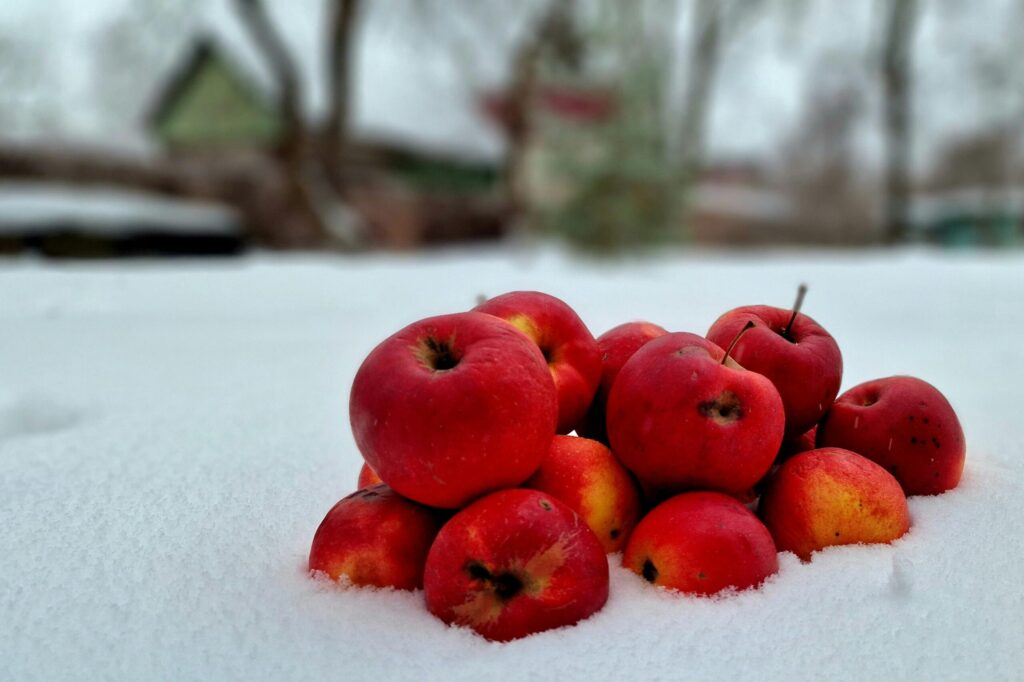
Though apples are harvested in the late summer and autumn, many varieties keep extremely well and remain available throughout winter – and in earlier times, a cellar stocked with apples was a family’s treasure through the cold months. In both North America and Europe, apples have long been a winter staple, whether eaten fresh, baked into warm desserts, or simmered into spiced cider. The old saying “an apple a day keeps the doctor away” holds a kernel of truth. Apples are rich in dietary fiber, especially pectin, a type of soluble fiber that aids digestion and helps maintain a healthy gut. In winter, when we might be eating heavier comfort foods, an apple’s fiber can aid in keeping our digestion regular and our cholesterol in check. Apples also contain vitamin C and a range of antioxidants like quercetin. Quercetin is a plant compound found in apple skins that has anti-inflammatory properties; it may help support our immune resilience during flu season. Unlike many fruits, apples can be enjoyed months after harvest without losing much of their nutritional value, especially when kept cool. Biting into a crisp apple in January, you still get that satisfying crunch and sweet-tart juice, along with nutrients that bolster your health. Furthermore, apples are hydrating and low in calories, making them a smart snack to balance out the hearty stews and meats that often dominate winter diets. Each variety – from tart green Granny Smiths to sweet red Galas – offers its own profile of flavor, but all share those core health benefits. In the context of a seasonal diet, apples exemplify how nature’s autumn bounty carries us through winter, providing natural sweetness and nourishment when other fresh fruits are scarce.
3. Brussels Sprouts
These miniature cabbage-like vegetables are one of winter’s green gems. Brussels sprouts traditionally come into season in late fall and remain available through the winter, especially in the cooler climates of Europe and North America where frost actually enhances their flavor. They grow on tall stalks and are harvested late in the year, making them a common sight in winter markets and holiday kitchen preparations. Nutritionally, Brussels sprouts are powerhouses. They are loaded with vitamin C – in fact, per serving they can rival oranges in vitamin C content, which means a plate of roasted Brussels sprouts helps fortify your immune system during cold season. They are also exceptionally high in vitamin K, important for bone health and blood clotting. In addition, these little sprouts are full of fiber, supporting healthy digestion and keeping you feeling full and satisfied on a chilly day. Brussels sprouts belong to the cruciferous vegetable family (along with broccoli, kale, and cabbage), and as such they contain special sulfur-rich compounds like sulforaphane. Research suggests sulforaphane and related compounds may help the body detoxify and could have cancer-preventive properties. Eating Brussels sprouts in winter not only connects you to seasonal traditions (they’re famously served at holiday dinners, simply roasted or sautéed with a bit of garlic and olive oil until caramelized and sweet), but it also provides a vibrant green vegetable at a time of year when leafy greens can be harder to find fresh. Many who disliked Brussels sprouts as children – perhaps served boiled and bland – discover that seasonal, properly cooked sprouts are deliciously nutty and crisp. They remind us that winter produce isn’t just about roots and preserves; it can offer fresh green vitality too.
4. Carrots
Pulled from the cold earth, carrots bring a welcome splash of color and sweetness to winter plates. Carrots are a classic winter vegetable because they can be harvested late and stored for months, and in some regions farmers even leave them in the ground under a layer of mulch to harvest throughout the winter. In Europe and North America alike, carrots have historically been a reliable source of nutrients during the darkest months. Their bright orange hue is a clue to their nutritional value: carrots are extremely high in beta-carotene, a plant pigment that our bodies convert to vitamin A. Vitamin A is crucial for healthy vision (hence the folk wisdom that carrots help you see in the dark) and for maintaining strong immune defenses and skin integrity. In winter, when sunlight is weaker and we spend more time indoors, getting enough vitamin A – along with its partner vitamin D – becomes important for overall wellness. Carrots help with one of those needs. Moreover, carrots offer a good amount of fiber and are rich in antioxidants. They also contain potassium and vitamin K. When you crunch on a raw carrot or savor it roasted until caramel-sweet, you’re treating yourself to a natural multivitamin. During World War II, the British even popularized carrots in winter to help citizens improve their night vision during blackouts – a bit of a propaganda twist to mask radar technology developments, but it boosted carrot consumption and public health nonetheless. Versatile and hardy, carrots can be enjoyed raw in salads for a fresh bite when other salad fixings are sparse, or cooked into soups and stews to provide both flavor and nourishment. Their natural sugars tend to intensify in winter storage, so a winter carrot can taste surprisingly sweet – nature’s reminder that even the humble root can be a delight when eaten in season.
5. Winter Squash (e.g., Butternut Squash)
When winter arrives, thick-skinned squashes that were harvested in autumn become a staple on tables. “Winter squash” is a term that encompasses varieties like butternut, acorn, spaghetti squash, and the iconic pumpkin – all of which can be kept for weeks or even months after harvest, providing nutrition deep into the winter. In North America and Europe, these squashes have traditionally been an important winter food, often featured in comforting dishes from soups to pies. Take butternut squash as an example: beneath its hard beige rind lies bright orange flesh packed with nutrients. Like carrots, winter squashes are rich in beta-carotene, which converts to vitamin A in the body. A bowl of roasted squash soup can thus help strengthen your immune system and maintain healthy skin and vision during winter’s chill. Squash is also a good source of vitamin C, potassium, and dietary fiber. The potassium in winter squash helps regulate blood pressure, which is a nice bonus for heart health while we enjoy these hearty foods. Meanwhile, the fiber supports digestion and steady energy levels. But beyond the numbers, there is something wonderfully satisfying about winter squash – its dense, sweet flesh feels nourishing and warming, providing the complex carbohydrates that fuel us steadily (unlike the quick rush of sugary treats). Culturally, pumpkins and other squashes feature in winter festivities and traditional recipes, from European pumpkin soups spiced with nutmeg to American Thanksgiving pumpkin pie. They connect us to a sense of abundance even in the season of scarcity. Cooking a winter squash often becomes a cozy ritual: slicing through the tough skin, roasting or simmering the pieces, and inhaling the sweet, nutty aroma that fills the kitchen. Eating these squashes in winter is both practical and poetic – practical in that they last long and provide vital nutrients, poetic in that they symbolize making the most of autumn’s gifts long after the leaves have fallen.
Embracing a healthy seasonal diet in winter means appreciating what nature provides at this time of year and reaping the benefits for our well-being. The five examples above – oranges, apples, Brussels sprouts, carrots, and winter squashes – are proof that winter’s pantry is full of vitamins, minerals, and flavors tailored for the season. By savoring these foods when they are at their peak, we nourish our bodies with exactly what we need to stay vigorous and resilient. We also partake in an age-old rhythm: planting, harvesting, feasting in tune with the calendar. In the depth of winter, eating a juicy orange or a bowl of hearty vegetable soup is more than just getting calories; it’s a reaffirmation that life persists and even thrives in every season. A seasonal diet keeps us connected to that cycle, ensuring we eat not only wisely and healthily, but also gratefully – mindful of the natural gifts each time of year brings to our table. By tuning our meals to the seasons, we find that health and pleasure go hand in hand, carrying us through winter’s challenges with vitality and grace.