As Americans struggle with affordable housing and developing nations experience population surges, something occurred to me. About a decade ago 3D printed housing was supposed to help pull us into a new era of construction. Why hasn’t it happened?
Let’s lay some groundwork. 3D-printed homes, built by robotic systems that extrude material (usually a concrete-based mixture) layer by layer, emerged as a promising innovation in the construction industry around 2012. This technique, known as 3D Concrete Printing (3DCP) or contour crafting, can automate the creation of a house’s basic structure (walls and frame) based on digital blueprints. Proponents argue that 3D printing could address issues like high construction costs and slow building times, especially in the context of affordable housing shortages. In successful pilot projects around the world, single-story homes have been printed in a matter of days with reduced labor, showcasing the technology’s potential to reduce construction time and costs. For example, one study found a 30% per-home building cost reduction (not counting the printer’s price) when comparing a 3D-printed home to a traditional one, and a major 3D printer manufacturer claims the process can be up to 20 times faster than conventional building.
While the core technology works, scaling it up for mass adoption faces significant hurdles. This chapter examines the key challenges limiting widespread use of 3D-printed homes, including technical limitations, economic factors (and potential impacts on traditional home values), social perception issues, and regulatory factors are the major obstacles.
Early adopters of 3D-printed construction have proven that the concept is viable, but technical limitations still constrain what can be built and how. One initial limitation was the size of structures that printers could handle. In the late 2010s, most printed homes were very small (often 600–900 sq. ft.), and researchers cited printer size and cost as barriers to building larger, family-sized houses. A 2018 study warned that the printer’s scale and expense made it hard to print multi-bedroom homes affordably. This has started to change – newer printers can print two-story houses up to 27 feet tall, and projects like the Wolf Ranch community in Texas have produced homes ranging from ~1,850 up to 3,000 sq. ft. with three to four bedrooms. Rapid advances in printer capability have largely dispelled earlier size concerns, as 3D-printed houses can now be comparable in size to standard American homes.
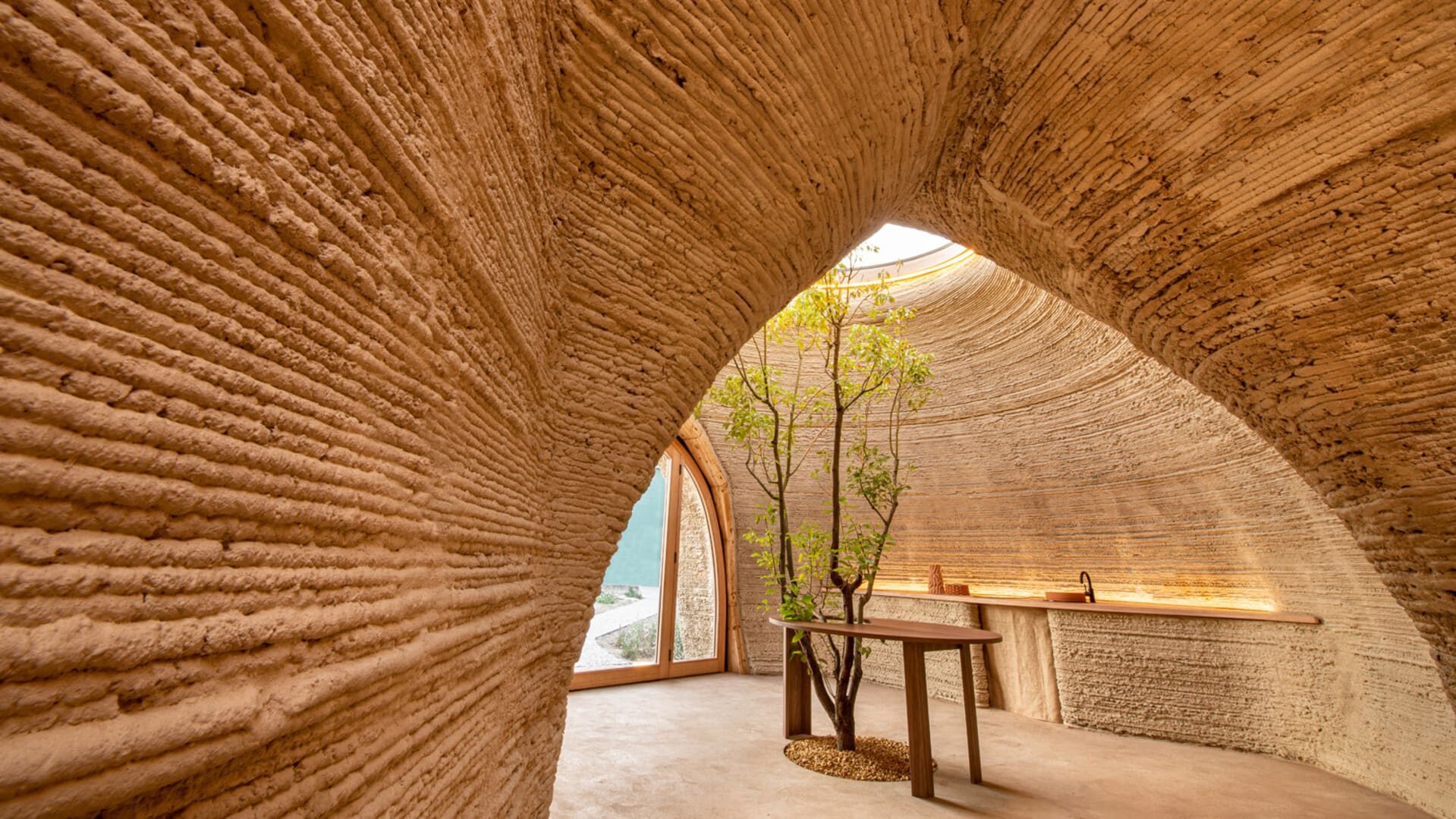
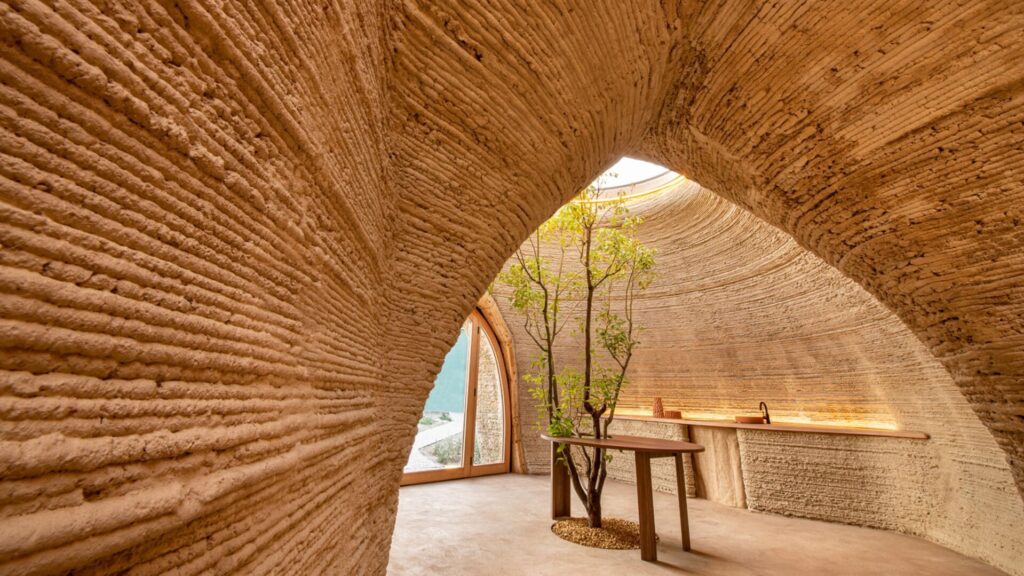
However, other technical challenges persist. Material and design limitations are a major issue. Most 3D-printed homes use a single material (usually a proprietary concrete mix) for the walls, which means limited flexibility in aesthetics and finishes. Early 3D-printed walls often had a layered, ribbed concrete appearance that some found unappealing. The lack of customization and textured look were noted as potentially off-putting to buyers in early trials. Builders are finding ways to smooth or finish printed walls and even mix in other materials, but achieving the same aesthetic variety as traditional construction remains a work in progress.
Another limitation is that 3D printing typically constructs only the shell of the house – the walls and basic structure. Other components (foundation, roof, windows, doors, wiring, plumbing, etc.) are still installed conventionally, and these can make up ~80% of total construction costs for a home. In other words, printing walls is faster and uses less labor, but it doesn’t eliminate the need for all the other trades. Integration with traditional construction is essential. For instance, printers must pause or leave gaps to allow plumbing and electrical conduit installations, and coordinating this adds complexity. There are also questions about how to insulate 3D-printed concrete walls to meet energy codes (since solid concrete has poor insulation by itself). Builders have asked how standard insulation or vapor barriers can be incorporated into printed walls – solving moisture and thermal performance is critical, especially in extreme climates.
Equipment costs and operational challenges are non-trivial as well. Industrial-scale construction printers are expensive – prices reported in recent years ranged from tens of thousands up to $500k–$800k for a single printer unit. Such a large upfront investment may deter smaller builders and makes some wonder if only large developers will afford to adopt the technology. The printers are also large and not easily portable in some cases. Setting up the printer on a new site, calibrating it, and ensuring a stable power source and material supply are all added steps that can eat into the time savings. If a printer has to be moved frequently (for infill urban lots, for example), the logistics might reduce the advantage over traditional methods. Additionally, the printing process can be sensitive to weather conditions – heavy rain or temperature extremes can disrupt the curing of printed concrete. Printing in a controlled environment (like a factory) is one solution to avoid weather delays, but that introduces transportation of modules to the site, shifting the process closer to modular prefab construction.
Quality control and safety are other concerns that come with new technology. There is limited long-term data on the structural performance of 3D-printed walls. Engineers and inspectors must ensure layer adhesion is strong and that the printed concrete is free of voids or weaknesses. The consistency of mixes, calibration of equipment, and potential for software or hardware errors introduce new failure modes. As one industry analysis noted, it’s an open question whether the quality of a printed home can be sufficiently inspected and guaranteed to meet homeowners’ satisfaction. Builders and insurers will want to know: are these homes as structurally sound and durable as conventionally built homes, especially under stresses like earthquakes or fires? (Notably, printed concrete walls are very fire-resistant and strong in compression, but their behavior under tension or movement is being studied.)
One of the big promises of 3D-printed homes is lower construction cost, which could, in theory, translate to more affordable home prices. By cutting down labor needs and construction time, developers can save money. Some estimates have floated 10–30% cost savings on construction when using 3D printing, primarily due to labor reduction and efficient use of materials. In the long run, if houses can be built significantly cheaper, this technology could disrupt housing markets by providing new homes at lower prices than traditional builders can match. In the context of an affordability crisis, that could be very positive – it might enable cheaper entry-level homes or reduce the cost of expanding housing supply.
So far, however, the real-world economic impact on home prices has been muted. Early 3D-printed homes have not been dramatically cheaper for consumers; instead, the savings have often been absorbed by the novelty or by other costs. A striking example is the Wolf Ranch development in Georgetown, Texas – the largest 3D-printed community to date, with 100 homes built by the company ICON. Despite the automation, these houses sold in the $475k–$600k range, roughly the local median market price for homes. In other words, buyers paid normal house prices, not a discount, and the developer (and technology provider) presumably captured any construction savings. As the project developers noted, the “promise of affordability has yet to fully manifest” in these first large-scale projects. The 3D-printed homes were competitive with traditional homes on price and amenities – which is a good sign for viability – but they did not undercut the market pricing in a way that would depress surrounding home values.
Looking ahead, if 3D printing does scale up and substantially lowers construction costs, there could be broader impacts on the housing economy. Building new houses faster and cheaper would help alleviate the chronic undersupply of homes (a key factor driving high prices). If supply catches up to demand, general housing price growth would slow and could stabilize. Existing homeowners sometimes worry that mass production of cheaper homes could reduce the value of traditional homes, though in reality much will depend on location and quality. There is a historical parallel in manufactured homes (mobile homes) which are inexpensive to build; those never truly disrupted site-built home values broadly, partly due to social stigma and zoning restrictions (more on that below). 3D-printed homes, on the other hand, aim to be comparable in appearance and longevity to regular houses, so a 3D-printed home in a neighborhood is not intended to be seen as a “cheap prefab” that could drag down values. In fact, if the technology is accepted, such homes might appreciate similarly to conventional ones. A real estate research blog posed the question of whether a 3D-printed home will hold its value for resale – will the next buyer value it the same as a stick-built house? This remains to be seen, since resale data on these homes is not yet available.
In economic terms, 3D printing could shift some value from labor to capital: traditional construction pumps money into local jobs for crews of carpenters, drywallers, etc., whereas automated construction shifts the cost to the machine and its operators. If adoption grows, there may be impacts on construction employment – a source of concern for labor groups. On the other hand, increased productivity could help meet housing demand and potentially lower costs for buyers or increase margins for builders (or both). Policymakers and industry observers note that the housing affordability crisis is largely driven by supply shortage, so any technology that can add supply faster (without sacrificing quality) is welcome. In practice, widespread affordable 3D-printed homes could stabilize or slow the rise of traditional home values, especially in starter-home markets, by offering a lower-cost alternative. But given the current early stage, those effects are speculative – for now, 3D-printed houses are a tiny fraction of new homes and often priced similarly to peers.
Every new construction method, despite how cool or innovative, has to overcome public perception issues, and 3D-printed homes are no exception. Social acceptance will play a big role in mass adoption. One challenge is simply the unfamiliarity – most people have never seen or been inside a 3D-printed house. Anything novel can trigger skepticism: prospective buyers might wonder if a printed concrete house is as safe, comfortable, and “homey” as a wood-frame house built by human hands. As mentioned, the aesthetics of early examples (with raw concrete striations on the walls) led some to view them as bunkers or utilitarian structures rather than warm homes. A 2018 survey found that a “lack of aesthetic appeal” could be a primary barrier to buyer acceptance. This is essentially a design stigma – the fear that 3D-printed homes will look ugly, plain, or cookie-cutter. Companies like ICON have worked to add variety: for instance, offering multiple floor plans, colors, and integrating architectural features so the homes don’t all look identical or industrial. Over time, if 3D-printed houses are visually appealing and customizable, this particular stigma should fade.
There’s also an association of 3D-printed homes with low-cost housing that can cut both ways. On one hand, many projects (in Texas, Mexico, India, etc.) have explicitly focused on using 3D printing for affordable housing or disaster relief housing. Communities sometimes resist affordable housing developments due to “Not In My Backyard” (NIMBY) attitudes or stereotypes that they will be lower quality. If 3D printing is seen as a way to create very cheap homes, people might unjustly conflate “3D-printed” with “poor quality” or assume such homes will bring down neighborhood values. This is similar to the stigma manufactured homes faced – even when well-built, they were stigmatized as “trailers” and often kept out of certain areas. Overcoming this prejudice requires demonstrating that a 3D-printed home can be just as attractive and long-lasting as a traditional home. Publicized successes like the Wolf Ranch community have helped, where residents have given positive testimonials about feeling safe and happy in their printed homes (one resident told CNBC “I feel safer in this house than any house I’ve ever lived in” due to its solid concrete construction). These real-life examples can counteract the fear of the unknown.
The materials haven’t been studied long-term. Homebuyers and even banks/insurers may harbor doubts about a novel construction method. Questions like “Will this house crack or collapse? Has it been proven in my climate? Can it withstand earthquakes or hurricanes?” naturally arise. As one housing researcher noted, potential buyers may have reservations about durability and safety of 3D-printed homes until there is more long-term proof. Gaining trust will likely require clear building code approvals (to signal official safety), warranties, and time – as a critical mass of these homes stand the test of decades, confidence will grow. Education will also help: understanding that the material (reinforced concrete) is actually very sturdy and that engineers have overseen the design can reassure people that it’s not just an experiment.
Progress is happening though. For example, an attempt to unify standards for 3D-printed homes has been incorporated into the International Residential Code (IRC) – the model building code used by many U.S. municipalities. The IRC now contains guidelines (an appendix or section) on 3D-printed concrete walls, which is a big step toward legitimacy. However, it’s up to each city or county to adopt that into their local code or not. Some places may delay until they see more data or until state building codes require it. In the meantime, builders often have to get one-off engineering approvals or variances to proceed with 3D printed structures, which adds time and cost. This uncertainty is a deterrent; as one analysis put it, a lot of “time and effort will be required to establish widely accepted codes and standards” and it’s unclear how quickly every jurisdiction will update their rules.
The regulatory environment is catching up slowly. Clear and supportive building codes are crucial for 3D-printed homes to move from curiosity to commonplace. Until then, developers will need to work closely with officials, sometimes educating them about the technology.
The next few years will likely see more pilot communities and larger developments (such as the 100-home Wolf Ranch project) that test these issues in real markets. Each successful project builds knowledge and credibility. Costs of the technology may come down as more competitors enter the space, and techniques may diversify (for example, printing modular sections in factories vs. printing whole homes on site). We may also see new materials – perhaps more sustainable “inks” than the current concrete mixes – which could alleviate environmental concerns and offer better insulation or strength.
In the most optimistic view, 3D printing could eventually allow custom-designed homes at the push of a button, with architecture freed from some traditional constraints. Curved walls, complex shapes, and efficient designs that were expensive to achieve by hand could become commonplace, potentially even at lower cost. This might actually increase the design diversity of homes (countering the stigma of uniformity). In the long run, if the technology is embraced, we might see an evolution in how homes are conceived: architects designing directly for automated construction methods, and homes being built in weeks rather than months.
But for now, it’s important to remain realistic.