
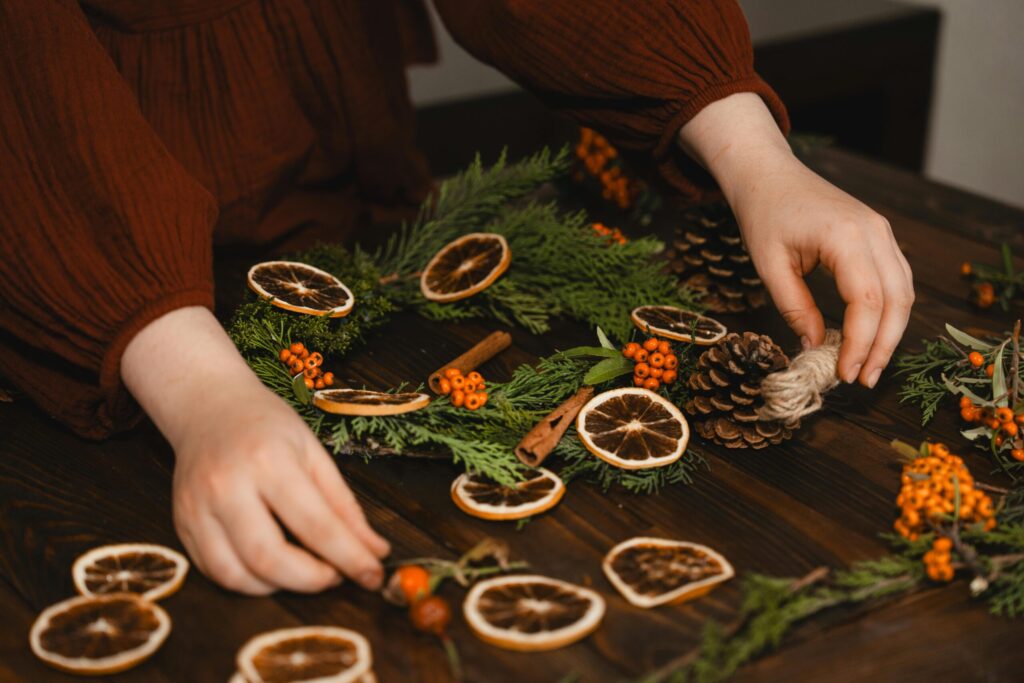
As a non-christian omnist, I have complicated feelings about the celebration of Christmas. Although we in the United States are often told that a “traditional” Christ-focused Christmas is central to the American identity, the truth is that Christmas was outlawed for several decades by a congress that was, arguably, made up of more practicing Christians. The season brings me joy because across the world we, humans, have collectively decided that Winter has been and will continue to be a time of celebration and reflection that runs as deep as civilization itself. In the deep of winter, long before the advent of Christianity, people kindled lights and gathered in celebration. The holiday we now call Christmas is a colorful tapestry woven from many MUCH older threads. Evergreen wreaths, feasting, gift-giving, and even the timing of Christmas itself owe much to pagan festivals that predate the Nativity story. Traditions from ancient Europe and beyond were carried forward, adapted, and absorbed into Christmas as we know it. The result is a holiday rich with secular and universal symbols.
Knowing this patchwork heritage reminds us that we can celebrate Christmas in a fully secular way, with joy and meaning. One can craft winter traditions focused on family, goodwill, and the warmth of human connection—no religious trappings required. After all, the impulse to revel at the turn of the year—lighting up the dark, exchanging gifts, sharing hope with our community—is a human one, not owned by any single faith.
Beyond Christmas itself, countless winter festivals around the world embody these themes. Across continents and centuries, communities have found unique ways to celebrate the solstice and survive the winter with cheer. Here, we profile ten remarkable winter festivals from pagan, folk, and Eastern traditions. Each one shines a light on the universal human need to find meaning and joy in the heart of winter’s gloom.
Yule (Northern Europe’s Solstice Feast)
In the frost-laden forests of ancient Scandinavia and Germany, Yule was the great midwinter feast. Long before Christmas trees twinkled in living rooms, pagans celebrated Yule at the winter solstice (around December 21st) to hail the return of the sun. For the Norse and other Germanic peoples, this was the darkest period of the year—sometimes only a few hours of pale daylight—and Yule was a time to banish fear with feasting and fire. Families would bring evergreen boughs inside their homes, symbols of life’s persistence through the cold. Huge logs—the famed Yule logs—were lit in the hearth and kept burning through the longest night, their flames a prayer for the sun’s rebirth.
Yule festivities could last for days. There were toasts and feasts, with plenty of ale and meat shared among kin and clan. It was a time to honor ancient gods and the spirits of ancestors. Historical accounts and Norse sagas suggest that a wild hunt, led by the god Odin, roared across the sky during Yule, and people left offerings of food or straw for Odin’s flying horse—an eerie precursor to leaving cookies for Santa’s reindeer. Other customs, like the Yule boar, involved sacrificing a boar or serving a special ham as a centerpiece, dedicated to the god Freyr for fertility and abundance. From the Yule celebration, many echoes found their way into Christmas: the use of evergreens, the burning Yule log (now sometimes just a log-shaped cake or a token fireplace tradition), and the very timing of twelve days of festivities (the origin of the “Twelve Days of Christmas”). Modern neopagans still celebrate Yule as a spiritual holiday, but anyone can appreciate its theme: even in the bleak midwinter, light and life will return.
Saturnalia (Ancient Rome’s Carnival of Chaos)
While snow fell in the north, the citizens of ancient Rome also whooped with joy during winter’s gloom. Their festival was Saturnalia, held in mid-December to honor Saturn, the god of agriculture and time. Saturnalia was a wild, raucous carnival—the holiday spirit turned up to ten. For a few days (traditionally December 17th to the 23rd), the strict social order of Rome flipped upside down. Servants and slaves were treated to leisure and banquets, even being served by their masters in a symbolic role reversal. Ordinary rules were relaxed: schools and courts closed, businesses stopped. People donned colorful, informal clothes and wore funny felt caps (the pileus) that symbolized freedom. The streets brimmed with laughter, music, and cries of “Io Saturnalia!” (roughly, “Hail Saturnalia!”) as everyone wished each other well.
Feasting was at the heart of Saturnalia. Families and friends gathered for sumptuous meals, often starting with a ritual sacrifice at the Temple of Saturn and then erupting into private house parties. A cheerful spirit of mischief and equality prevailed. Another beloved Saturnalia custom was gift-giving. Presents tended to be humble fun things—wax candles, little pottery figurines, or toys—exchanged on the day of Sigillaria (December 19th). The idea was more about thoughtfulness and humor than extravagance; poets even joked about people giving gag gifts to one another. During Saturnalia, homes were decked with greenery and lit with lamplight and candles, symbolizing the quest for light as the days stood at their shortest. All these elements later colored the celebration of Christmas: the merriment, the gatherings, the exchange of gifts, and decorating with evergreens and lights. Saturnalia’s message was to enjoy life’s pleasures and each other’s company, a rebellious burst of joy amid winter—an inheritance that modern holidays still cherish.
Shab-e Yalda (Persian “Night of Birth”)
On the longest night of the year in Iran, families stay up late to welcome the dawn’s victory over darkness. This festival is Shab-e Yalda, or Yalda Night, celebrated on the winter solstice (December 20th or 21st). “Yalda” means “birth,” referring to the rebirth of the sun as the nights begin to shorten. In ancient times, it was said that evil spirits roamed freely on this night, so people would gather in groups, keep their homes bright with candles, and tell stories to ward off the darkness. By banding together in warmth and light until sunrise, they ensured that the longest night would not overcome them.
Modern Yalda Night remains a cherished cultural celebration in Iran (and among Persian communities worldwide). Family and friends convene at the home of the eldest relative, bundling up around a low table laden with treats. To remind everyone that light and summer will return, they eat watermelon, pomegranates, and other fruits saved from warmer months. The watermelon’s red flesh and the pomegranate’s glistening seeds symbolize the glow of dawn and the waxing of life’s light. Nuts and dried fruits are passed around as well, tokens of health and prosperity. People take turns reciting classical poetry—especially the soulful verses of Hafez, the beloved 14th-century poet—seeking wisdom and hope in his lines. The room is filled with soft candlelight, laughter, and the sweetness of shared memories. When the first light of dawn finally peeks over the horizon, it is met with joy and relief—proof that even the longest night yields to morning. Shab-e Yalda beautifully demonstrates how the simple act of gathering together can transform a night of deep darkness into a celebration of light and hope.
Dōngzhì (East Asian Winter Solstice Festival)
As winter’s chill settled over ancient China, the turning point of midwinter was marked by a festival of family unity and warm nourishment. Dōngzhì, which means “the extreme of winter,” is the East Asian winter solstice celebration, usually falling around December 21st or 22nd. In Chinese culture (as well as in other East Asian countries influenced by the lunar calendar like Korea and Japan), Dōngzhì is a time to observe the balance of yin and yang. The winter solstice, being the shortest day, represents yin at its peak (darkness and cold are strongest). After this day, the yang (light, warmth) begins to rise again. Thus Dōngzhì is a turning point, a quiet herald of spring’s eventual return.
Traditionally, families come together on Dōngzhì for a hearty meal. Different regions have different customary foods, but one beloved treat is tāngyuán – glutinous rice flour dumplings often served in a sweet warm soup. In southern China, these rice ball dumplings (sometimes brightly colored) symbolize reunion; their round shape suggests completeness and harmony. In northern China, there is a saying that “if you don’t eat dumplings at Dōngzhì, you’ll freeze your ears off!” This comes from a legend of a Han Dynasty healer who gave out hot dumplings to poor villagers suffering from frostbite. So in the north, families eat meat dumplings or wontons in broth, warming both body and soul. Beyond food, Dōngzhì is a time when relatives visit each other and make offerings to ancestors, expressing respect and continuity with the past. Some communities will visit temples to light incense and give thanks for the year’s harvest and survival. Though it’s usually a quieter observance than Lunar New Year, Dōngzhì carries a profound message: in the heart of winter, the seeds of yang energy and rejuvenation are sown. The act of gathering, sharing food, and affirming family bonds on the coldest, darkest day reflects a deep cultural wisdom – that togetherness is our human sun against the winter’s night.
Makar Sankranti (Indian Winter Harvest Festival)
In India, the end of the dark phase of winter is celebrated as Makar Sankranti, a festival that usually falls around January 14th. Unlike many holidays based on the lunar cycle, Makar Sankranti is fixed by the solar calendar. It marks the time when the sun’s power begins to grow again and the days become longer, signaling the close of winter’s deepest chill. It is essentially a harvest festival, known by different names in various regions (such as Pongal in Tamil Nadu or Lohri in Punjab).
Common threads unite these celebrations. Many people wake before dawn on Makar Sankranti to bathe in rivers and offer prayers to the rising sun, giving thanks for the return of light and warmth. A spirit of gratitude and charity fills the day; families share festive sweets made of sesame and jaggery (ingredients believed to nurture and warm the body). Across northern and western India, the skies come alive with vibrant kite-flying competitions—countless colorful kites soaring upward, symbolically carrying hopes into the sunlit sky. In the Punjab region, the night before Makar Sankranti is observed as Lohri with crackling bonfires, around which people sing folk songs, dance, and toss grains and sweets into the flames as offerings for prosperity. In every variation, Makar Sankranti rejoices in the sun’s renewed strength and the promise of new growth—a communal cheer that the darkest days are finally ending.
Soyal (Hopi and Zuni Solstice Ceremony)
Half a world away, in the high deserts of the American Southwest, the Hopi and Zuni peoples have carried out one of the world’s oldest winter solstice rituals. The Hopi call it Soyal or Soyalangwul, a sacred ceremony that begins on the shortest day of the year (around December 21st) and can extend for days or even weeks. For these Puebloan communities, whose lives traditionally revolved around seasonal cycles of agriculture, the winter solstice is a profound moment: it is when the sun has traveled furthest from the people, and prayers must be offered to coax it back to a life-giving path. Soyal is not a public festival with casual merrymaking; it is more akin to a collective spiritual undertaking. Yet it carries the same core idea as other winter festivals: uniting to ensure the return of the light.
During Soyal, village members gather in kivas—underground ceremonial chambers—to perform rituals passed down through generations. The kiva symbolizes the womb of the earth, a place of origin and renewal. Here, Hopi priests and participants engage in prayer, chanting, and secret rites to call forth the sun’s strength for the new year. One important aspect is the making of prayer sticks (called pahos)—wooden sticks decorated with feathers and corn meal, each prayer stick representing a specific wish or blessing (for rain, growth of crops, health, etc.). These are placed at sacred sites or given to the elements to carry the prayers to the spirits. Another feature of Soyal is the presence of katsinam (or kachinas) – spirit messengers that play a central role in Pueblo spirituality. During Soyal, the very first katsina of the ceremonial cycle is believed to arrive, a sign that the spiritual world is engaging to help bring sunlight and rain. Sometimes men dress in katsina regalia and perform dances that are both prayer and dramatization, although the major public kachina dances come later in spring.
While much of Soyal is solemn and inward, there is also a communal aspect: it’s a time for renewing fellowship within the tribe and teaching the young about their cosmology. The rituals purify the community and prepare everyone for the responsibilities of the coming year. When the ceremonies conclude, the Hopi believe they have helped turn the sun back toward its summer path. In essence, Soyal is an act of hope and faith in cosmic balance. It illustrates that even in a remote desert, in a quiet underground chamber, the human response to the longest night is to gather together, light a fire in the dark, and will the sun to return.
Hogmanay (Scottish New Year’s Fire Festival)
As the New Year approaches, Scotland erupts in celebratory fervor that rivals – and historically even overshadowed – Christmas. The festival of Hogmanay, Scotland’s traditional New Year’s Eve and New Year’s Day celebration, has roots in winter customs that long predate today’s fireworks. While Christmas was once suppressed in Scotland (in the 16th and 17th centuries, the Kirk discouraged or outright banned Christmas as a “Popish” or pagan-influenced feast), Hogmanay grew in importance as the time to rejoice during the cold, dark winter. To this day, Scots treat New Year’s with great enthusiasm, extending celebrations into January 1st and 2nd, which are public holidays.
Hogmanay’s exact origins are mysterious – the very word Hogmanay might derive from French, Norse, or Gaelic terms. But the way it’s celebrated reflects a blend of influences from Viking Yule to Celtic fire rites. One of the most famous Hogmanay traditions is first-footing. Just after midnight on New Year’s, the first person to step into your home – the “first foot” – is believed to set the tone for the year. For good luck, this visitor should ideally be a dark-haired friend (old lore suggests an unlucky first visitor would have been a fair-haired stranger, recalling Viking invaders of yore). The first-footer typically brings symbolic gifts: a lump of coal for warmth, a piece of shortbread or black bun (rich fruitcake) for food, maybe a coin for prosperity, and of course a dram of whisky to toast the occasion. When that lucky guest crosses the threshold, bearing these tokens, it’s as if they carry good fortune in with them to share.
Fire is another key element of Hogmanay. All across Scotland, fire ceremonies light up the winter night to burn away the old year and beckon the new. In some towns, like Stonehaven, locals perform the spectacular fireball swing—people parade through the streets swinging big cages of burning torches around their heads, creating arcs of flame in the air. In other areas, tradition called for bonfires and the custom of “saining,” where homes and barns were blessed with the smoke of juniper and sprinkled water to purify them for the new year. These fiery practices echo ancient beliefs in cleansing and rebirth through flame. And of course, no Hogmanay is complete without communal singing of “Auld Lang Syne” at the stroke of midnight—a song by the poet Robert Burns that has become an anthem of worldwide New Year sentiment, inviting us to cherish old friendships and new beginnings. With its mix of warmth, superstition, and exuberant revelry, Hogmanay showcases a winter festival focused not on religious rites but on community, luck, and the turning of time.
Ōmisoka (Japanese New Year’s Eve)
In Japan, the end of December carries relatively little Christmas weight (though secular Christmas lights and gift exchanges have become popular). Instead, the big winter celebration is Ōmisoka, New Year’s Eve, which leads into Oshōgatsu, the New Year’s Day festivities. Ōmisoka (December 31st) in Japan is a day of thoughtful preparation and communal anticipation for a fresh start. Culturally, it is considered critical to finish the old year well so that one can start the new year with a clean slate.
On Ōmisoka, families thoroughly clean their homes in a custom called ōsōji (year-end cleaning). This is both literal and symbolic: sweeping away dust and disorder is akin to purging any misfortune or grudges from the past year. Businesses close early as everyone heads home or back to their hometowns to be with family. In the evening, many households share a simple yet meaningful tradition: eating toshikoshi soba, or “year-crossing noodles.” These long buckwheat noodles, eaten on New Year’s Eve, symbolize a long life and the cutting off of hardships from the old year (since soba noodles break easily when chewed). Slurping down a warm bowl of soba together provides a sense of comfort and closure as midnight draws near.
Unlike the noisy countdown parties common in the West, Ōmisoka is often marked by moments of quiet reflection. Many families gather around the television to watch a national music program or simply spend time together listening as nearby Buddhist temples begin to toll their great bells. In a ceremony called Joya-no-Kane, temples strike a bell 108 times at midnight, each deep peal intended to cleanse away one of the 108 human sins or worldly desires in Buddhist belief. Some people venture out to a shrine or temple at midnight to witness this ritual and offer the year’s final (or first) prayers. When the clock finally hits twelve, the atmosphere is gentle and hopeful. Loved ones exchange soft “Akemashite omedetō” (“Happy New Year”) wishes and perhaps sip a small cup of sake. The real festivities – visits to shrines, elaborate family feasts, and exchanging of New Year greetings – take place on New Year’s Day. But in that midnight moment of Ōmisoka, with the low boom of temple bells rolling through the cold air, one feels the spirit of renewal washing over the darkness. It is a serene and poignant way to turn the page, proving that a winter festival need not be boisterous to be profound.
Kwanzaa (African-American Festival of Community)
Not all winter festivals have ancient origins; some have been created in modern times to fulfill a cultural need. Kwanzaa is one such celebration – a young tradition (established in 1966) that takes place from December 26th to January 1st, honoring African heritage and community values. It is a secular, cultural holiday rather than a religious one. The name comes from a Swahili phrase meaning “first fruits,” evoking the harvest festivals of Africa. Each of Kwanzaa’s seven days is dedicated to one of the Nguzo Saba (Seven Principles): ideals like unity (umoja), self-determination, collective work and responsibility, cooperative economics, purpose, creativity, and faith (imani). Families celebrating Kwanzaa light a kinara, a special candleholder with seven candles (three red, three green, and one black in the center), to mark each day. The candle colors have symbolism – black for the African people, red for their struggles, and green for hope and the future. With each candle lighting, the family reflects on the principle of that day and how it can be lived out, making Kwanzaa a time of learning and connection, especially for children.
Throughout the week of Kwanzaa, communities come together in evenings of music, storytelling, and dance celebrating African and African-American culture. Homes are decorated with African art, woven mats, and fruits and vegetables that symbolize the bounty of heritage. On December 31st, many observe a festive feast called Karamu, inviting friends and neighbors to share traditional foods and celebrate the principle of creativity. There may be performances of African drumming and poetry, or a lighting of all seven candles with speeches that emphasize unity and hope. On the final day, people reflect on the value of faith in each other as they look toward the new year. In just a few decades, Kwanzaa has grown into a meaningful tradition for millions. It demonstrates how even in the cold of winter, the warmth of community and the pride in one’s cultural roots can create a vibrant festival of light. Kwanzaa adds a unique voice to the season, reminding us that beyond the commercial bustle of the holidays, what truly sustains us are the values we share and the histories we carry forward.
Koliada (Slavic Solstice Carols and Celebration)
In Eastern Europe, the midwinter nights were once filled with Koliada festivities – ancient pagan celebrations of the winter solstice and new year. Long before Christmas took hold in these lands, communities marked the rebirth of the sun with bonfires, feasts, and ritual visits from house to house. In fact, the very tradition of going caroling has roots in Koliada. To this day, in countries like Ukraine, Poland, and Russia, groups of singers (often children) wander through snowy villages during the Christmas season, carrying a bright star and singing carols. This charming custom originally began as pagan Koliada songs, offering blessings to each household in exchange for small tokens of food or coin. The lyrics of some carols still echo ancient themes – praising the return of light and wishing prosperity to the family.Koliada celebrations in olden times could be lively and theatrical. Revelers might dress up in costumes, sometimes as farm animals or mythical creatures, symbolizing fertility and abundance. A popular figure was a costumed goat, a harbinger of plenty, who would playfully “die” and come back to life in song – mirroring the cycle of the year. In some regions, families prepared a special sheaf of wheat called the didukh, which was brought into the home as a symbolic ancestor spirit and a promise of the next harvest. These practices, blending merriment with reverence for nature’s cycles, helped people pass the coldest nights with hope. Today, while the Koliada festival has largely merged with Christmas and New Year observances, its spirit survives wherever a hearty carol is sung on a frosty night. It reminds us that singing away the darkness is a cure for winter’s chill that people everywhere have embraced in their own style.
These festivals reveal a truth: human beings everywhere seek light, joy, and connection when the world grows cold and dark. Christmas, for all its unique trappings, is just one star in a wider constellation of winter celebrations. It shines brightly thanks to the many older lights that feed it—pagan Yule fires, Roman candles, Persian poems, Chinese dumplings of reunion, Indian kites flying toward the sun. Knowing this rich tapestry, we can appreciate that no culture has a monopoly on hope and good cheer in winter. And so, one can celebrate Christmas in a secular way or celebrate any of these other festivals, partaking in a shared human inheritance.