How infinite is mathematical infinity?
Counting the stars is a private trick that always goes wrong: you begin with steady numbers and, after a few dozen, the list slides into fog and the sky remains the sky. The same happens with a palm full of sand. You try to hold each grain in your head, but at some point the hand stops being an arithmetic instrument and becomes an occasion for wonder—more, always more; more than you can name. That slip from precise tallying into something fuzzy is where the story of infinity starts.
Almost every culture has met that slip in some register—cosmic, theological, mundane. Vedic poetry names ananta, “without end,” as both serpent and metaphor; Babylonian and Greek sources use astronomical and calendrical images to gesture at boundlessness; myth supplies serpents who circle themselves and rivers that have no mouth. These are not theorems. They are attempts to make a felt experience legible. The ancients were exceptionally good at registering the strange quality of endlessness. They were less eager to treat that strangeness as a thing you could count.
That hesitation has a pedigree. Aristotle—thinking in the fourth century BCE—made a distinction that would shadow Western thought for centuries. There is a kind of infinity that is potential: an action you can continue forever (keep adding one more). And there is a kind of infinity that is actual: a completed totality containing infinitely many members. Aristotle accepted the first and refused the second, at least for magnitudes. His instinct was pragmatic and ontologically modest: mathematics can talk about processes that never end, but it should not pretend a completed infinity sits on a shelf. That position felt sensible because, for everyday life and most practical geometry, potential infinity handled everything needed. It also fit a cognitive default: humans are excellent at procedures and sequences; we are less built for entertained absolutes.
Cognitive science still reminds us of that default. Experiments across languages and cultures show how fragile exact numerosity is without symbolic scaffolding. People who speak languages with limited numeral systems—famous cases include Pirahã and Mundurukú—can match quantities and understand small exact numbers, but they struggle with arbitrary large exact counts unless they use external devices: marks, tokens, or notations. Infinity, which asks for either an endless operation or an all-at-once total, presses hard against that limitation. The symbol system you inherit or learn—words, numerals, the sideways-eight of popular culture—does cognitive work. It turns the haze of “a lot” into something you can manipulate. But that work is learned, not innate.
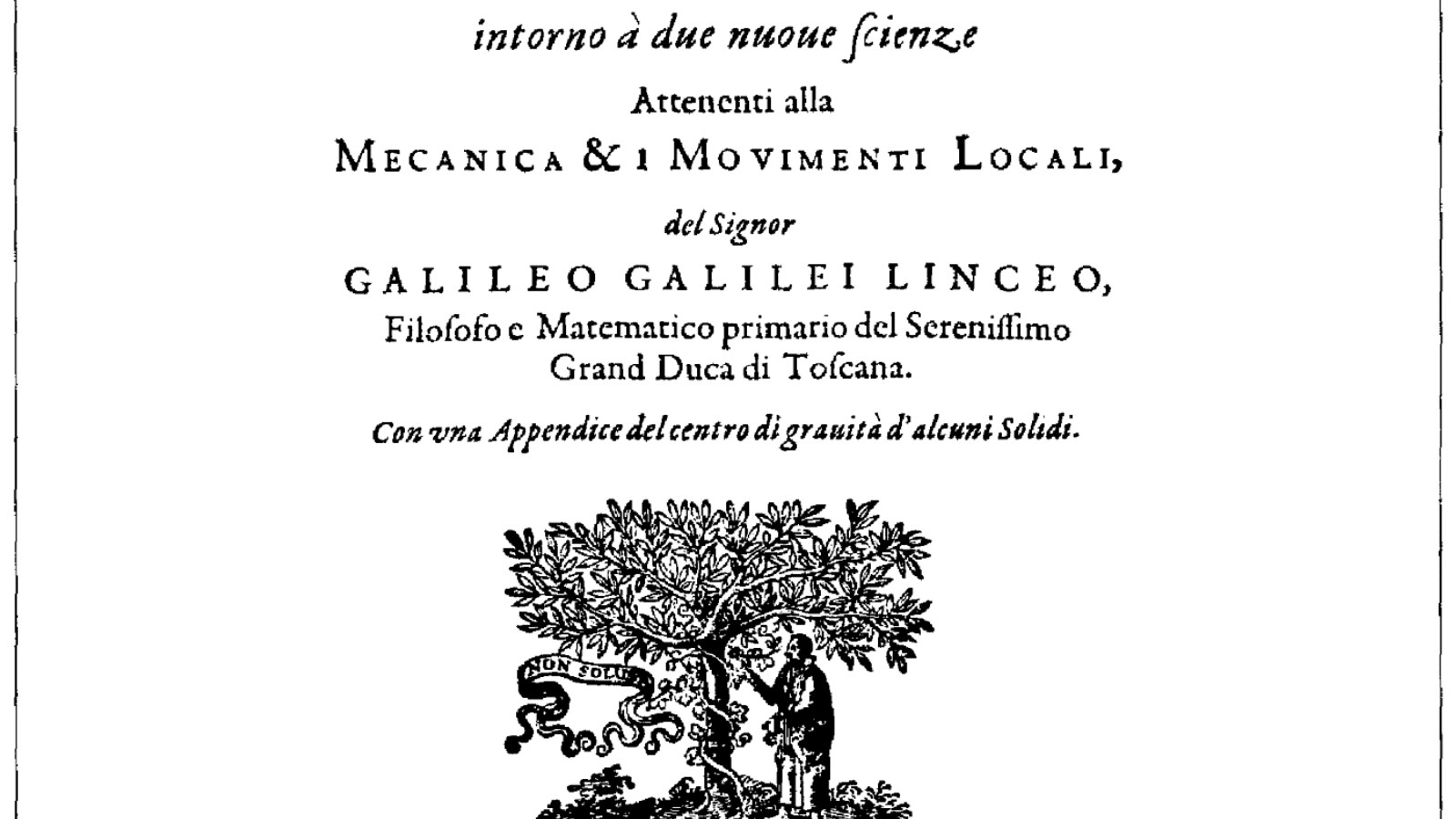
Even when you have language for numbers, ordinary intuitions about size go haywire in the infinite. Consider Galileo, pacing around the seventeenth-century night sky. He observed a simple, baffling mismatch. Pair each natural number with its square: 1 with 1, 2 with 4, 3 with 9, and so on. Intuitively, perfect squares should be rarer—how many squares are there between one and a million? Far fewer than the integers. Yet you can construct a one-to-one pairing between the entire set of natural numbers and the set of their squares. Somehow the sparse-looking club of squares fits perfectly with the full club of naturals. Galileo used this observation to warn that we cannot naively extend finite rules about size to infinite collections. The mind, trained on limited sets, assumes that “part is smaller than whole.” For infinity, that principle can fail. It felt like a trick, but it was a real alarm: we needed a new vocabulary to talk about “how many” in the infinite.
That vocabulary came only after a long gestation in mathematical thought. For many centuries the infinite functioned as a limit, a horizon, or a metaphor—useful, but not an entity to be operated on. Calculations with infinitesimals, for example, worked well enough for engineers and astronomers even when philosophers grumbled about their ontological status. Math would get good answers by treating infinity like a procedure: take ever smaller slices, let them tend to zero, never claim you have literally reached an infinite totality.
Then Georg Cantor did something that looks, in hindsight, brutally simple and unavoidably creative. He asked: what if we compare sizes by seeing whether we can match elements of one set to elements of another? If you can pair each element of set A with exactly one element of set B and vice versa, why not say they have the same cardinality? The idea of one-to-one correspondence is ordinary enough—useful in bookkeeping—but applied to infinite sets it becomes explosive.
Cantor used that principle to prove two startling things. First, the integers are countable: you can list them in a sequence so that each integer appears somewhere in the list. Second, and more startlingly, the real numbers—the points on a continuous line—are not listable in this way. Cantor’s diagonal argument is a small, almost playful maneuver: given any putative list of real numbers, he showed you can construct a new real number by changing the nth digit of the nth number, guaranteeing the constructed number differs from every number on the list. Therefore the list could not have been complete. The continuum, the set of real numbers, is a larger infinity than the set of integers. Infinity had grown a name for at least two distinct sizes.
Once that move was visible, Cantor did not stop. He climbed a ladder of transfinite cardinals: aleph-null for the countable, aleph-one and higher for larger infinities. The power set operation—taking all subsets of a set—produces strictly larger cardinals, and so an inexhaustible hierarchy opens. Cantor famously conjectured that the continuum is the next cardinal after the integers; that proposal later became the continuum hypothesis. You can feel both the audacity and the humility in this program: audacity to take infinity as an object you can compare and manipulate, humility because the ladder has an architecture that outstrips immediate intuition.
That architecture also produced political culture. Cantor’s ideas met resistance. Leopold Kronecker objected on philosophical grounds that mathematics should be grounded in constructive, finitely observable processes; L. E. J. Brouwer’s intuitionists wanted proof methods that could produce explicit constructions rather than accept completed infinities; others worried about the metaphysical import of admitting transfinite entities into the mathematical ontology. At the same time, defenders like David Hilbert embraced Cantor’s work and elevated the continuum problem to the front of mathematical concern at the start of the twentieth century. The quarrel was not merely technical hair-splitting. It was a clash about what kind of speech mathematicians could employ: cautious procedural speech, or declarative existential speech that names entire infinite realms.
The debate carried over into the foundations of mathematics and into the axioms mathematicians are willing to accept. By the mid-twentieth century, the most widely adopted framework—Zermelo-Fraenkel set theory with the Axiom of Choice (ZFC)—gave a firm battlefield for questions about infinity. But then the story acquired a philosophical punchline: Kurt Gödel and Paul Cohen showed that the continuum hypothesis is independent of ZFC. That means that within this standard axiomatic system you can neither prove nor disprove the statement that there is no cardinal between the countable and the continuum. The consequence is subtle and disorienting. We learned how to name and compare infinities, and then we discovered that the answers to some natural questions depend on the rules you adopt. Infinity, once pluralized, did not suddenly become transparent; it began to look like a multi-faceted phenomenon whose further shape is partly a convention of our symbolic choices.
That discovery is intellectually generous. It asks us to be modest about claims that mathematics yields inevitable metaphysical truths. Some answers are forced by the basic rules; others are contingent on axioms we choose because they’re convenient, fruitful, or aesthetic. The independence of the continuum hypothesis is not a defeat; it is a diagnostic: it tells us where mathematical activity will require new axioms or a change of viewpoint.
All of this—the ancient metaphors, Aristotle’s caution, Galileo’s paradox, Cantor’s ladder, Gödel and Cohen’s independence—sits against a human background that is stubbornly ordinary. Students, even well-trained ones, often flounder when asked to distinguish “an infinite process” from “an infinite object.” They treat infinity sometimes as an operation, sometimes as a largest magnitude, sometimes as a cryptic symbol. Educational research shows that the form of representation matters: seeing infinity as a set with a defined cardinality requires a different mental maneuver than seeing it as a never-ending addition. Teaching the concept has to create new symbolic habits, the same way learning algebra requires you to stop thinking of x as “an unknown” and start thinking of it as a placeholder governed by rules.
There are also category mistakes waiting to be made when mathematical infinity ventures into theology or cosmology. Calling God “infinite” in religious language does not mean the same thing as saying the real numbers have cardinality 2^{aleph-null}. Cantor himself flirted with metaphysical reflections—he contrasted the mathematical transfinite with an “absolutum” in his later writings—but care is needed. Mythic and theological infinities solve different human tasks: they aim to express transcendence, moral authority, or meaning. Mathematical infinities do technical work: they allow precise comparison, construction, and prediction. Keeping those voices separate is not pedantry; it preserves the distinct roles each kind of infinity plays in thought.
That separation helps explain why naming infinities was both liberating and narrowing. Names let you do things you could not do before. Once Cantor gave us bijection, diagonalization, and cardinal arithmetic, entire fields became possible: measure theory, functional analysis, modern topology. Engineers and physicists learned to use infinite-dimensional spaces as tools. But in returning to the original wonder—the child with sand, the person under stars—you notice that naming did not extinguish awe. If anything, it relocated it. Wonder moved from the impossible task of holding “all the grains” in the mind to the more refined astonishment at what mathematics permits: that there are more real numbers than integers; that you can well-order sets in ways that defy naive pictures; that some natural questions have no answer inside a given axiom system. Naming made new mysteries.
There is an ethical, if quiet, implication. The decision to accept or reject certain axioms changes what mathematical entities we allow. Those choices shape not just abstract puzzles but the tools available to other disciplines that borrow mathematical frameworks. Choosing axioms is not a purely technical act; it is a judgment about what kinds of existence claims we will treat as legitimate. In other words, the politics of infinity is subtle: it appears in the background decisions that shape entire intellectual cultures.
Still, the practical point wins out in ordinary mathematical life. Naming infinities turned the vague into the operable. Once you can say aleph-null and mean a thing, you can build on it; you can classify functions, define convergence, and sculpt spaces with controlled properties. That ability has consequences: predictable ones, like better theories of signal processing and probability; surprising ones, like the discovery that some questions about the continuum cannot be resolved without adding more axioms.
What seems most human about the whole history is that it replays a familiar cognitive arc. You encounter an experience that resists your current categories; you invent a symbol or a procedure that captures some regularity in that experience; and then, astonishment replaced by facility, you discover that the invention reveals deeper puzzles. Naming is a tool for exploration, not a terminus. From the mouthfuls of sand to the formal alephs, the path is not a straight progression from ignorance to triumph. It is a repeated pattern of being surprised by what the world lets you do with a new symbol.
So the lesson is double. On the one hand, the infinite no longer functions as a single baffling idea because mathematics learned to split it into kinds—countable, uncountable, ordinal, cardinal, measure-theoretic—each a different instrument. On the other hand, that splitting made infinity stranger in its own way: it opened landscapes where questions depend on choices about axioms and where some answers are forever deferred unless we alter our rules. In short, we taught the infinite to be speakable and useful—and in doing so we learned that naming it does not make it small; it makes it a thing with parts, powers, and politics. The hand can no longer hold every grain, but it can now count several very different kinds of “more,” and that changes what we can build with astonishment.