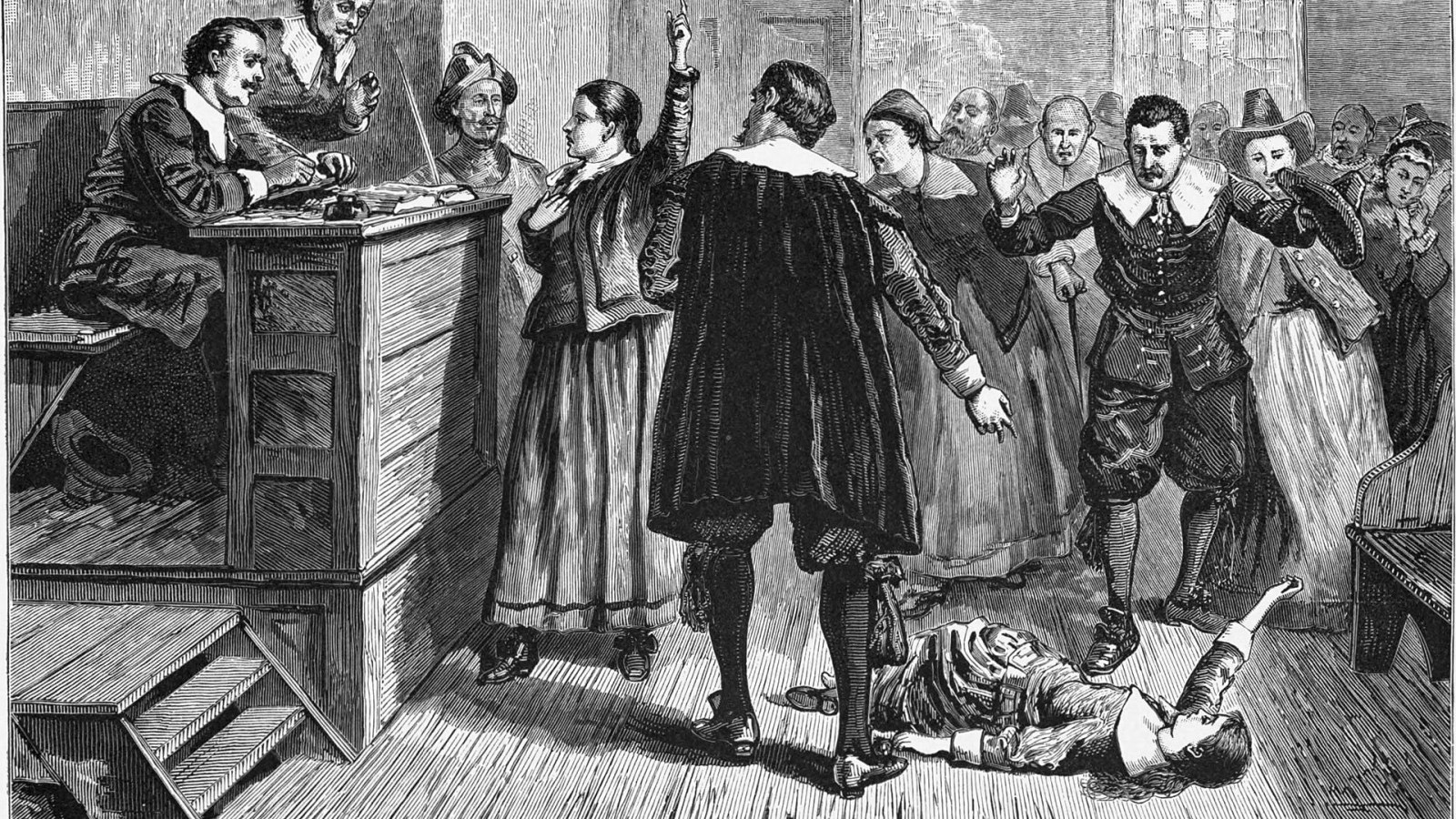
The Dark Truth of Satanic Panic
They came with shovels. Flashlights bobbed in a suburban dusk while neighbors gouged into the schoolyard dirt—not for a lost pet or a time capsule, but for a secret room. Somewhere beneath the asphalt, the rumor said, children had been led into rituals: altars, tunnels, dark ceremonies. The crowd hit compacted earth and found ordinary soil. They kept digging anyway. The act is almost metaphoric—how a rumor becomes labor, and labor becomes proof in the mind of a neighborhood. That image is where the story of the Satanic Panic properly begins: not with a court document or a headline, but with people committing physical force to belief.
The McMartin Preschool prosecutions that began in Manhattan Beach in 1983 are the closest thing the panic has to an emblem. What started as an allegation swelled into, for its time, the longest and most expensive criminal prosecution the United States had seen. The process consumed years and millions. Teachers and staff were arrested; custody and court calendars stretched into a drama that the media loved and that the legal system never comfortably resolved. By the end of the decade only two defendants had been tried; one was acquitted, the other faced retrial after hung juries and was eventually released when prosecutors declined to pursue further charges. The public record from the trials is a messy braid of sensational claims and thin corroboration: tunnels that were never physically verified, tales of animal mutilation and newborn killings that lacked independent evidence, and children’s testimony gathered in methods that would later be judged suggestive.
Saying the prosecutions were sensational is not the same as saying they were frivolous. The background is important. In the late 20th century professionals were finally recognizing that child sexual abuse existed, that it had been underreported, and that children often lacked the language or power to report it. Hotlines, mandated reporting laws, and specialized units emerged because the problem needed identification and response. That legitimacy matters; the panic did not emerge from nowhere. It emerged where vigilance met a cultural moment ripe for horror.
A cultural matchstick was Michelle Remembers, published in 1980, a book whose recovered-memory narrative was spectacular and contagious. It described subterranean rites and conspiratorial religious influence with a confidence that made lurid details feel plausible. The book has been widely discredited since, yet at the moment of its publication it provided images—underground altars, satanic cabals—that fit straight into television-ready metaphors. Televangelism, paperback therapy manuals, anti-cult sentiment, and a public appetite for moral panic formed a combustible mix. Once a few communities accepted that frame, ambiguous signs—scratches on a child’s arm, a bedtime story, a bruise—could be read as proof.
How did ambiguous signs escalate into courtroom-ready narratives? The path is not mystical. It runs through the mechanics of interviewing and the fallibility of memory. Research developed in the decades after the panic, most visibly advanced by scholars like Elizabeth Loftus, established that memory is reconstructive. It is not a sealed tape recorder. Humans—even adults—fill in gaps, confabulate in response to suggestion, and reshape recollections when prompted repeatedly. Children are especially vulnerable: their memories are more malleable, their desire to please authority is stronger, and they often lack the meta-awareness to tell hypotheticals from realities.
In the 1980s, many of the procedures used to question children amplified those vulnerabilities. Interviewers asked leading questions, repeated prompts, rewarded answers they wanted to hear, and sometimes presented imaginative play as evidence. In the moment, that protocol can look reasonable: professionals are trying to be thorough, to give a child time to remember. But repetition and suggestive phrasing do not just elicit hidden facts; they can manufacture confident reports about events that never occurred. A child who once pretended a game can, under that pressure, come to report it as literal abuse. Courts in subsequent years and a body of experimental psychology made clear that such techniques produce unreliable testimony.
If suggestive interviewing helped assemble the spectacle, institutions poured fuel onto the fire. Child-protection units, therapists, prosecutors, and advocacy groups were under real pressure to find and fix abuse. Funding, public trust, and career incentives favored those who identified abuse rather than those who withheld it. Media institutions, seeking dramatic material, foregrounded the most sensational claims and featured distraught parents and breathless summaries of testimony without the interrogative patience that proper adjudication requires. In short, the incentives favored discovery and drama more than epistemic caution.
That combination—psychological vulnerability plus institutional incentive plus a media ecology eager for horror—produced what scholars call a moral panic. Moral panics are not accidental outbursts; they are social processes in which a threat is defined, dramatized, and then policed in ways that can far outstrip the evidence for it. The Satanic Panic is a textbook example: it spread beyond California into other American communities and across borders, cropping up in Canada, the United Kingdom, New Zealand, and elsewhere in variants that all shared the same pattern: suggestive interviewing, repetitive public retelling, community fear, and prosecutorial zeal.
Yet the panic also did something strange and historically useful: it forced a reform conversation. The catastrophe of McMartin and similar prosecutions catalyzed work to fix the very methods that had allowed imagined atrocities to be dressed as evidence. Forensic interviewing protocols were developed, tested, and adopted. The NICHD investigative interview protocol—one prominent outcome—centers on open-ended prompts, neutral language, strict limits on repetition, and careful documentation. That is not a consolation prize. It is an institutional correction born out of genuine harm: better methods reduce the risk of creating false memories and simultaneously improve the chance of reliably detecting real abuse.
Which brings us to an uncomfortable irony: the same moral urgency that drives people to protect children can, without proper discipline, produce epistemic violence. Pattern-seeking is a survival trait. It helps a parent notice signs of danger. In a social context, that trait becomes amplified; groups rally, metaphors circulate, and certainty becomes a form of solidarity. But certainty without careful evidence destroys lives. Teachers, childcare workers, and professionals suffered public humiliation, wrongful detention, and ruined reputations. Children were repeatedly questioned in ways that might have harmed them. Communities were torn. The panic showed that protection and justice can be opposed not by malevolence but by good intentions gone epistemically wrong.
This paradox—vigilance that yields error—has modern resonances. The technologies are different; social media accelerates rumor and flattens nuance faster than tabloids ever did. The pattern, however, looks familiar: a vivid narrative, amplified by committed communities, accrues moral force; dissent carries reputational risk; incentives reward urgent discovery over patient verification. That’s why comparisons between the Satanic Panic and recent exposures of real, organized abuse require caution. Jeffrey Epstein’s crimes and the networks documented around him are real and grimly instructive about how exploitation can be systemic. They are also different in kind from the mass-conspiracy allegations of the 1980s: Epstein-related reporting rested on records, victims’ corroborated accounts, and material evidence in ways that panic-era ritual-abuse claims generally did not. To collapse the two is to make a false equivalence; to ignore connections of method and incentive is to miss a lesson.
What, then, does a sane, evidence-respecting response to allegations look like? There are practical habits worth learning—procedures that protect children without turning communities into rumor-enforcement machinery.
First: prioritize immediate safety without substituting it for adjudication. If a child may be in danger, remove them from harm and provide medical and psychological care. That is urgent and nonnegotiable. But emergency protective steps do not require building a criminal case on interviews conducted without methodological rigor.
Second: favor method over melodrama. Extraordinary claims need extraordinary corroboration. Independent evidence—physical traces, contemporaneous records, neutral eyewitnesses, forensic analysis—matters. A narrative that grows primarily through repeated interviews and pulsing headlines needs more scrutiny than one tied to independently verifiable material.
Third: watch incentives. Not in a paranoid way that assumes bad faith, but in a practical way. Institutions and individuals can unintentionally favor narratives that bring resources, status, or funding. The knowledge that certain outcomes confer reward should prompt additional caution, not dismissal.
Fourth: require transparency for novel techniques. When therapeutic or investigative methods lack peer-reviewed validation, they should not be allowed to become the backbone of prosecutions. The recovered-memory techniques of the 1980s spread through networks of belief more than through empirical validation; the legal and therapeutic communities have paid a price for that haste.
Fifth: train neutral intermediaries and cultivate reflexive humility. Interviewers need training that emphasizes listening more than suggesting, documentation more than drama, and restraint more than zeal. And communities need to accept that moral outrage feels purifying in the short term—and that such emotional clarity can mislead.
It helps to remember small, human details. The mother in Manhattan Beach who helped dig the schoolyard made the panic tactile; she turned a rumor into a community act. Consider the prosecutor who read lurid recovered-memory books and later pursued cases with zeal—people’s private beliefs shape professional choices, even when those beliefs are rooted in cultural images rather than in hard corroboration. These aren’t accusations of malice. They are reminders that decision-makers are human: they carry metaphors into interviews, they want to be effective, and they are susceptible to the same pattern-seeking brains that shaped the initial rumor.
The debates that followed the panic’s peak were bitter and long. Therapists, victims’ advocates, prosecutors, and scientists clashed over what counted as evidence and how to weigh pain against proof. The recovered-memory controversy of the 1990s showed that a heated moral concern could ignite scientific and legal debates about the very nature of memory and the ethics of therapeutic technique. That controversy did not prove that abuse never occurred; it argued that certain methods increase the risk of false recollection. The important distinction—abuse happens, but some ways of investigating and treating it are dangerous—tends to get flattened in time into caricatures of denialism or gullibility.
There is a final, practical irony worth noting. The Satanic Panic wrecked lives precisely because institutions reacted as though discovery were always discovery: the presence of narrative felt like evidence. The institutional reforms that emerged from that wreckage—better interviews, more cautious prosecutorial standards, an increased emphasis on corroboration—are proof that systems can, belatedly, learn. That is not a tidy or satisfying moral; it is a functional one. From catastrophe came better tools.
So what legacy do we want? Not a culture that reflexively disbelieves every allegation. Not a culture that reflexively convicts the accused on the basis of sensational stories. The proper legacy is institutional exactness matched to moral urgency. Protect children immediately; investigate calmly. Demand evidence and honor victims’ suffering. Train professionals in methods that reduce suggestion; subject therapeutic techniques to peer review before they become legal instruments; keep the media honest about uncertainty; teach communities to slow down before they start digging literally or figuratively.
The shovel in the schoolyard gives us a last image that’s less metaphor than instruction. It shows how communities perform belief, how ritualized action can be mistaken for proof, and how devotion to a narrative can outpace care for truth. If honoring victims means anything at all, it means refusing the cheap satisfaction of certainty without proof. It means making our outrage dignified by demanding the best standards we can muster. That is how we protect children and preserve the innocent from ruin. That is the exacting, stubborn, and hopeful work that should be our inheritance.