
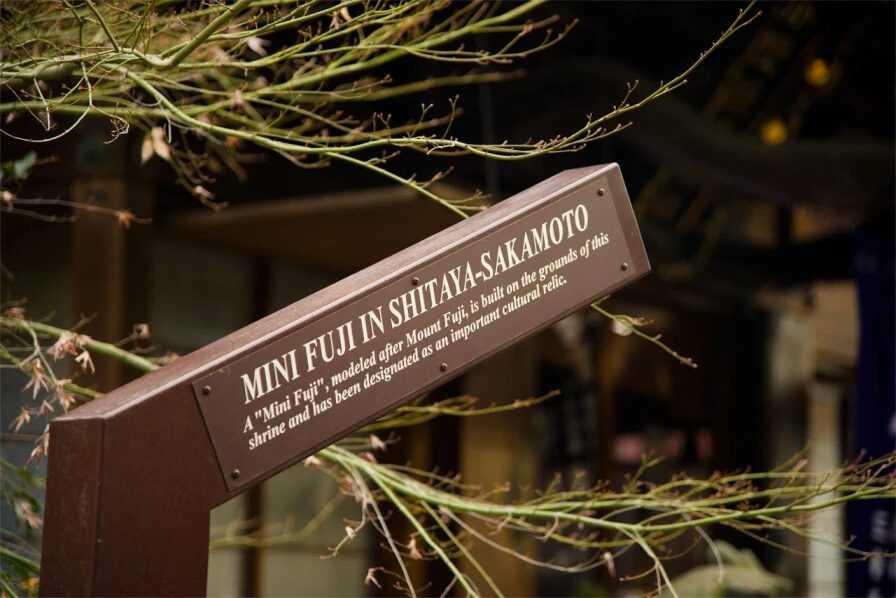
In a quiet corner of a Tokyo neighborhood, tucked behind the gates of a Shinto shrine stands a small mound of rocks and earth shaped unmistakably like the cone of Mount Fuji. These are miniature Mt. Fuji mounds, known as fujizuka, and they are far more than just playgrounds. They represent a link across centuries of Japanese history, a tradition born of mountain worship and community spirit. When children play on these miniature peaks today, they are literally climbing on living history – engaging with structures that have given generations of Japanese a sense of grounding and existential context spanning over a thousand years of cultural continuity.
Mount Fuji, Japan’s tallest and most revered mountain, has always been an object of spiritual fascination. Its near-perfect symmetry and looming presence on the horizon have inspired awe and spiritual reverence. Pilgrims have trekked to Fuji’s real summit for well over a millennium – the first recorded ascent by a monk dates back to the 7th century – and countless myths and poems celebrate the mountain’s sacred stature. However, for much of history, making a pilgrimage all the way to Mt. Fuji’s peak was no simple task. Travel in old Japan was slow and arduous; the journey from Edo (old Tokyo) to Fuji could take days or weeks on foot. Moreover, until the late 19th century, women were forbidden from climbing Mt. Fuji, and the elderly or infirm often couldn’t manage the steep hike. Yet the spiritual yearning to “ascend” Fuji at least once in life was strong. How could ordinary townsfolk participate in this rite without undertaking a grueling expedition?
The ingenious answer was to bring Fuji to the people. During the Edo period (1603–1868), grassroots religious associations called Fujiko devoted to Mount Fuji found a creative way to let everyone symbolically climb the holy mountain. They constructed small-scale replicas of Fuji right in their local neighborhoods. These fujizuka – literally “Fuji mounds” – were often built within shrine precincts. Shaped and named after Mount Fuji, they stood around 3 to 10 meters tall, complete with trails and even station markers to mimic the real climb. The Fujiko devotees would painstakingly pile up rocks (frequently bringing in real volcanic stones from Mt. Fuji itself for authenticity) and create a miniature mountain that anyone could ascend. By ascending these mounds and praying at the tiny peak shrine, people believed they received the same spiritual benefits as scaling Fuji’s summit.
These surrogate Fujis caught on widely. At the height of the Fujiko movement in the 19th century, around 800 fujizuka dotted the Tokyo area. They transformed the flat city landscape with little pyramids of faith. Some fujizuka were prominently built alongside major shrines and became beloved local landmarks. For example, the Shinagawa Shrine Fujizuka in Tokyo, constructed in 1869, rises about 15 feet and offers a panoramic view from its mini-summit. Even as Tokyo modernized, many of these mounds endured, tucked between city blocks or overshadowed by high-rises, quiet testaments to a bygone era of pilgrimage. Today, roughly sixty fujizuka remain in Tokyo, and several have been declared cultural heritage sites.
To climb a fujizuka is to walk in the footsteps of Edo-era commoners and samurai, of priests and peasants – and to do so in a matter of minutes. “You can reach the top in only one minute,” as one amazed visitor noted of a shrine’s mini-Fuji, marveling at how this tiny hill can stand in for the real thing. The experience is meant to be both spiritual and communal. Traditionally, many fujizuka are opened to the public only on certain days of the year. Notably, June 30th and July 1st (around the official opening of Mt. Fuji’s climbing season) are popular dates when local shrines invite worshippers to climb their fujizuka and receive blessings for health, good fortune, or safe delivery of children. On such days, one might see lines of visitors – including excited children in summer yukata and elderly folks clutching walking sticks – patiently winding up the slopes of a mound just a few paces high. At the summit, which might barely accommodate a handful of people, a small shrine (often dedicated to Konohanasakuya-hime, the Shinto deity of Mt. Fuji) awaits their prayers.
The climb itself is often designed to emulate the stages of Fuji. Fujizuka builders sometimes placed markers for the “10 stations” that correspond to the checkpoints on Mt. Fuji’s actual trails. Tiny torii gates or stone pillars indicate progress, lending a sense of journey and accomplishment even on a miniature scale. For children, these little touches transform the mound into a fantasy adventure: each twist of the path a new discovery, each shrine or statue an exciting mystery. For their parents and grandparents, there is satisfaction in knowing the youngsters are taking part – however playfully – in a time-honored devotional act. It’s common to hear local lore and ghost stories associated with fujizuka as well, which only adds to the magic for kids. Some say these mounds are guarded by spirits or that climbing them grants a special wish. In the eyes of a child, scampering up a fujizuka can feel like entering a storybook realm where the past and present meet.
Not all fujizuka are restricted to festival days. A number of them, such as the Shinagawa Shrine mound, are accessible year-round. These have effectively become small public hills that anyone can climb at any time – and indeed, neighborhood children often do. Imagine growing up next to one of these: to a child, it’s the perfect natural playground, a place to run up and down, play hide-and-seek, or stage imaginary mountain expeditions. The fact that it’s on shrine grounds means it’s likely a safe, car-free space where parents feel comfortable letting kids roam a bit. And while a toddler may not understand the spiritual significance, they inevitably absorb a sense that this mound is something important. They see adults bowing or leaving offerings at the tiny summit shrine; they hear the stories from their elders about why it’s there. In this way, play and reverence intermingle.
By climbing a fujizuka, children are indirectly participating in a continuum of devotion that goes back many centuries. They are literally walking the same path (albeit miniaturized) that countless ancestors walked in pursuit of blessings and connection to nature’s grandeur. Each little footstep up the mound echoes the pilgrimages of those who climbed the real Fuji or its proxies long ago.
The Hatomori Hachiman Shrine in Tokyo’s Sendagaya district features a well-known fujizuka and traces its origins back over a millennium. One travel guide notes that the shrine was founded as far back as the year 730 and has, for several centuries, featured a Fuji mound on its grounds. In such cases, you truly have layer upon layer of history: the shrine’s patron deities have watched over generation after generation, and for the last few hundred years those generations have included fujizuka climbers. It’s humbling to think that a child scrambling up the rocks today is part of an unbroken chain of climbers.This continuity provides a kind of existential context for the community. In modern urban life, so much changes so quickly – buildings rise and fall, technology evolves, traditions wane. Yet here is a tangible piece of the past that remains relevant simply because people keep using it. The children might not articulate it, but their play is tying them to their heritage. Sociologists sometimes speak of “reinforcing cultural memory” through ritual, and in a subtle way, climbing the local mini-Fuji is a ritual of belonging. It says: this is our place, our story. The mountain is not distant or abstract; it’s right here under your feet, and it holds the prayers of those who came before you.