Earth may look like a planet of water, but fire is more unusual in the universe
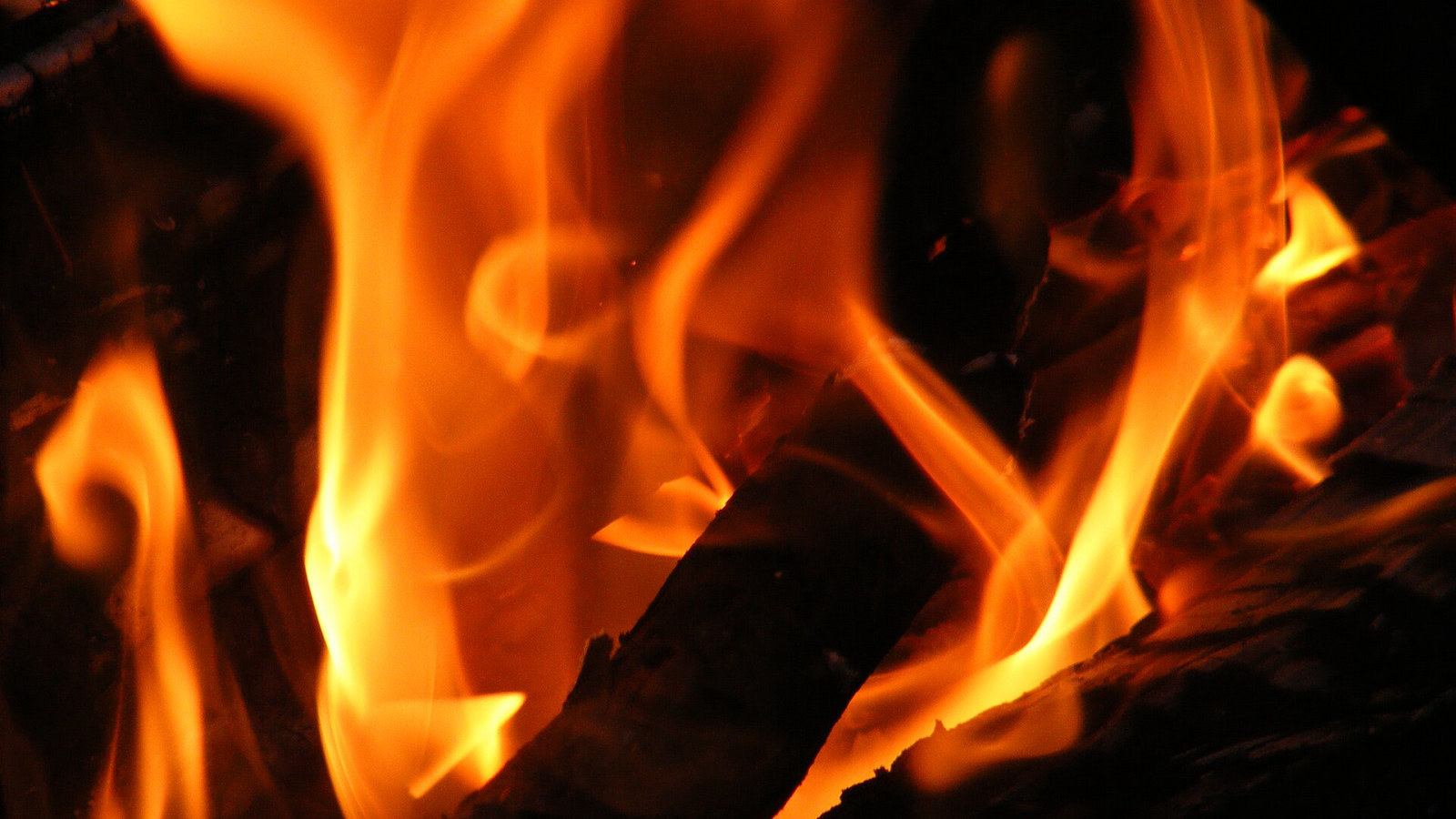
Strike a match and notice how improbably busy the little flame is. There’s the sulfur-smell blur, the brief white flare where chemistry runs at a different speed, then the orange cone that settles into business—lifting heat, spitting sparks, eating wood. That steady insistence, the tongue of flame you can feed and coax, is not a trivial property of matter. It is the product of a very narrow planetary arithmetic: a particular oxidizer in the air, fuel that will dry and burn, enough pressure for gases to meet, and a source of ignition. Change any of those terms and the match hesitates, the log only smolders, or the whole idea of a campfire becomes a romantic impossibility.
Fire as we see it—the visible, dancing combustion fed by molecular oxygen—requires more than a combustible substance and an eager spark. Engineers describe the necessary conditions with blunt, useful numbers: flammability envelopes, lower flammability limits, and a limiting oxygen concentration below which flames cannot propagate. These are not metaphors for fragility. They’re practical thresholds used daily in industry to prevent explosions: reduce oxygen in a tank by a few percentage points and the same chemistry that would light a flare will go dead. Scale that trick up to planetary size and the lesson gets stranger—worlds can sit a hair above or below the line where orange tongues of flame are possible. On one planet matches might blink and die; on another wood might never be dry enough to make a hearth. On Earth, we treat flame as ordinary; elsewhere it can be absent by design of physics.
The oxygen that feeds our fires is a product of life. The modern atmosphere—roughly four-fifths nitrogen, one-fifth oxygen—was not always so obliging. For billions of years after Earth formed, free oxygen was scarce, because any O2 produced by early metabolisms was mopped up by chemically reduced rocks and volcanic gases. The long, messy transition that raised atmospheric O2 into a stable presence is often compressed into the phrase Great Oxidation Event, centered around 2.4 billion years ago, but that phrase masks unevenness. Oxygenation was episodic and localized; pockets of low oxygen likely persisted even after other regions turned aerobic. In short: life invented oxygen early, but the planet took a long time to let oxygen persist in the air where flames could find it.
Even when oxygen became common, flame still needed more. The rock record offers a simple, telling constraint: charcoal—fossilized evidence of real flaming fires—appears only after plants colonized land and produced abundant, dry above‑ground biomass. Oxygen alone did not make the world a tinderbox. You needed a body of vegetation that could catch and carry flame, a climate that created dry seasons, and ignition sources—lightning, eruptions, or later, humans—to touch match to kindling. Fire on the landscape, then, is a co‑evolutionary product: atmospheric chemistry, life’s form and distribution, climate rhythms, and spark frequency all had to line up. That combination makes wildfire not a chemical inevitability but a historical outcome contingent on many steps.
Step off Earth and the fragility becomes obvious in three quick inversions. Mars is a kind of anti‑bonfire: its air contains only tiny traces of oxygen and its surface pressure is a mere whisper of Earth’s, so gas molecules are too sparse for flames to run. Titan, Saturn’s hydrocarbon world, reverses other assumptions: it rains methane, hosts lakes of ethane, and has organics in abundance, yet it lacks free molecular oxygen—an island of fuel without an oxidizer. Venus is another inversion: dense, CO2‑heavy air that squashes temperatures and chemistry into regimes where free O2 near the surface is negligible. Each neighbor demonstrates a different way the conditions for an ordinary campfire can fail—wrong pressure, wrong oxidizer, oxidizer locked in the wrong molecular form.
The technical pieces are simple enough to state but striking in their consequences. Take two numbers. First, the lower flammability limit for a given fuel: how lean a mixture of fuel and air can be and still burn. Methane, for instance, requires only a few percent of the gas mixed into air before it becomes flammable in the tight sense. Second, the limiting oxygen concentration: the lowest fraction of oxygen in a mixture that allows flame propagation for a given fuel. For many hydrocarbons the limiting oxygen concentration sits in the low to mid‑teens of percent by volume. Those aren’t mystical thresholds—pressure and temperature shift them—but they show how a planetary oxygen fraction dropping by only a few points can flip fuels from roaring to forever smoldering. Thin atmospheres resist flame; dense, oxygen‑rich ones make ignition easy. The arithmetic is surprisingly narrow.
That brings an engineering curiosity into view. The same physics that determines whether a planet can host flames is what safety engineers exploit to keep factories from burning. Purge a vessel’s headspace with inert gas until oxygen falls below the limiting concentration and you render it nonflammable. On Earth, biological evolution and geochemistry wandered through a parameter space that left the atmosphere near the zone where flames are possible. A few different contingencies and we might have arrived somewhere quite different.
Those contingencies matter for how we think about habitability beyond liquid water. Water has become shorthand for “could support life,” and with good reason: solvent, chemistry, droplets that let molecules come together. But liquid water does not imply an oxygenated, fire‑ready air. A world can be wet, organic, and utterly fireless because it lacks a free oxidizer. Conversely, a planet could hold O2 but be too thin, too cold, or too barren of flammable biomass for flames to ever shape landscapes or cultures. Fire is a systems‑level property—the result of atmosphere, geology, life, and climate aligning, not just one favorable molecule.
The recent decades of exoplanet research have complicated a neat story in which oxygen equals life. For some kinds of planets, models show abiotic pathways that can produce significant O2 in the atmosphere: photodissociation of water with hydrogen escape to space, or atmospheres with low non‑condensable inventories that let O2 accumulate because sinks are weak. These are plausible in specific contexts—around active, small red dwarf stars or on worlds with particular volatile histories—but they are model‑dependent and sensitive to initial conditions. The upshot for an astronomer is caution: detecting oxygen is an important clue, but it is not a smoking gun. For the question of fire specifically, even a false‑positive oxygen atmosphere may not be a fire‑ready one, because pressure, surface fuels, and ignition frequency must also be right.
There’s a cultural domino effect to consider, one that sharpens how extraordinary our ordinary technologies are. Human control of fire enabled cooking, metallurgy, ceramics, centralized heating, and countless cultural rituals. If flames are a planetary accident rather than a cosmic commonplace, then some paths to technological complexity might be harder to find elsewhere. A civilization that never had open flames would need different routes to metallurgy—electric furnaces, concentrated solar, or chemical reduction under pressure—or it might never develop certain classes of artifacts at all. Symbols and myths built around hearth and blaze might be absent or displaced by other elemental horizontals. None of this argues that technology requires fire, only that the particular bundle of affordances fire supplies—heat, a mobile high‑temperature chemical environment, a public ritual object—shapes the trajectory for social and material invention.
Ecology tightens that thought. Fire recycles nutrients, shapes succession, and can promote diversity in fire‑adapted biomes. Higher atmospheric oxygen tends to make combustion easier and lowers the moisture threshold required for fuels to ignite, so oxygen level is a parameter in ecological models of ancient and future fire regimes. But the relationship is not linear or global. Local humidity, plant chemistry—some plants produce oils that make them naturally flare‑prone—topography, and weather system patterns all mediate whether fuels burn brightly or not at all. The paleo record hints at broad correlations—more terrestrial biomass after plant colonization; more charcoal once oxygen and fuel were abundant—but the thresholds and timing are debated. Oxygen may be necessary for large‑scale flaming, but it is not alone sufficient.
Back to Titan for a second, because it’s one of those thought experiments that keeps turning: an explorer there might find hydrocarbon beaches and planks of organic material washed ashore, tempting evidence that fire should follow. But without bringing an oxidizer from off‑world, nothing you light on Titan will sustain the orange, oxygen‑fed flame familiar at home. The scene is almost comic: a sea of fuel with no one to burn it. It flips our intuition—on Earth we worry about too much fuel, on Titan the problem is the absence of the right oxidant.
There’s also the chemical nuance that oxygen is not the only oxidizer. In industrial chemistry and in constrained terrestrial environments, other oxidants—chlorates, perchlorates, nitric acids—can support combustion-like reactions. On alien worlds, different oxidizer chemistries might create exotic kinds of “burn,” but those chemistries come with different signatures and constraints. The visible, dancing yellow‑orange flame that has become a central symbol and tool in human culture is specifically an O2‑driven phenomenon and requires a planetary history that delivered molecular oxygen into the air column in the right quantities.
All of which pulls toward a modest, precise conclusion. Fire as humans know it is not a universal, elemental constant; it’s a planetary conversation between atmosphere, life, geology, and climate. Earth’s atmosphere sits in a narrow band of composition and pressure that allows many fuels to sustain flames; that band is the product of billions of years of microbial toil, tectonic shifts, and the slow rise of greenery on land. Engineers can recreate the same conditions to stop fires in factories; evolution and chance nudged the planet into conditions that let flames be both a hazard and a tool. That confluence is enabling and contingent.
So when sparks lift from a campfire and float up into a clear night, they are not just pretty physics; they are living light shaped by deep planetary history. The match’s white flare is chemistry, yes, but the orange cone is the end result of microbial metabolisms, oxygenation pulses, the arrival of plants, and climates that let twigs and leaves dry on schedule. To call flame merely a chemical reaction is to miss the larger choreography. In cosmic perspective, the orange tongues we take for granted may be rare, and that rarity is part of what makes them precious: small planetary quirks that quietly rewired everything from cuisine to metallurgy to myth. Fire, in other words, is our planet’s particular trick—a narrow, contingent, and profoundly enabling accident of chemistry and life.