
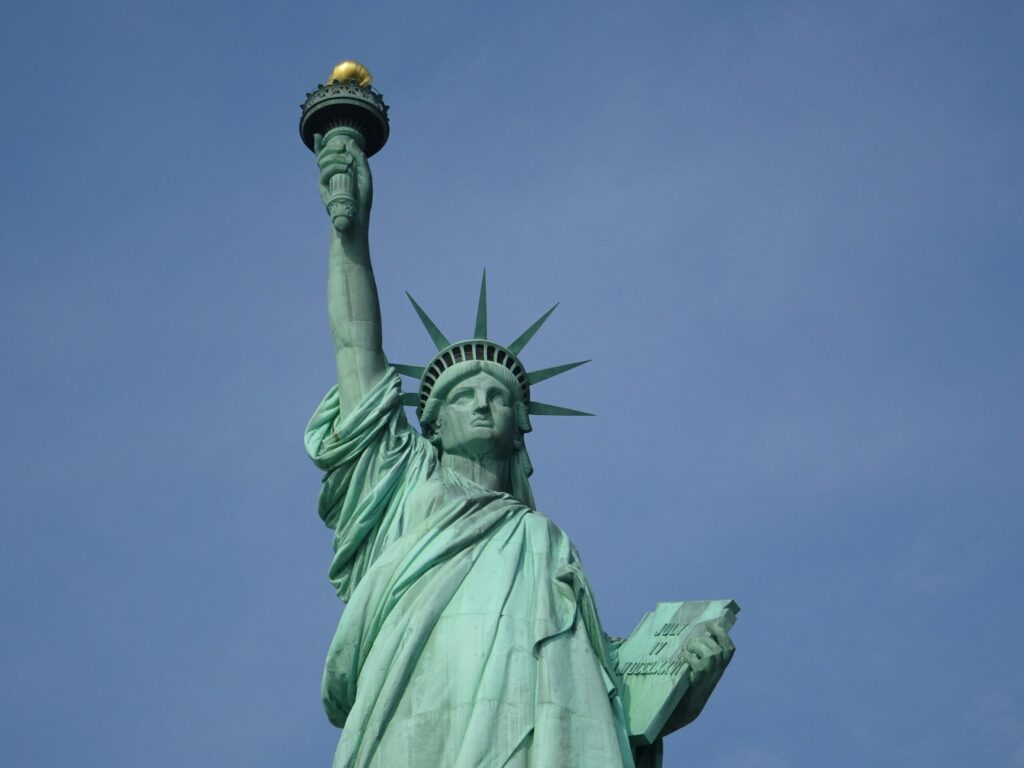
In this article, with tensions high in the U.S. I wanted to present the stories of five people who entered the country illegally and contributed to the fabric of our culture. America’s story is woven from the journeys of immigrants – including those who arrived not through official channels, but through determination and hope. In this chapter, we profile five Americans who initially entered the country illegally (undocumented) yet went on to make outsized contributions to society. Their lives highlight the enormous potential that can be unlocked when immigrants are given a chance – and serve as a powerful argument for streamlining pathways to citizenship. Instead of relegating people to an exploitable underclass, embracing aspiring Americans enriches the nation culturally and economically. As these five stories show, immigration isn’t a burden on developed economies; it’s often a net positive, fueling innovation, cultural exchange, and growth.
Lue Gim Gong – Pioneering Horticulturist (1860–1925)
In the late 19th century, a young Chinese man named Lue Gim Gong arrived in America under precarious circumstances. The Chinese Exclusion Act of 1882 barred Chinese immigrants, but Lue managed to enter with forged papers and the help of a Florida farming family. He could easily have remained an unseen farmhand. Instead, Lue became a celebrated horticulturist whose innovations transformed American agriculture. Nicknamed the “Citrus Wizard,” he applied pollination techniques learned from his mother in China to breed hardier fruits. In Florida’s groves, Lue developed tomatoes with higher yields and grapefruits that ripened at just the right time, improving harvests. His crowning achievement was a new variety of early-ripening Valencia orange – sweet, robust against frost – that saved the Florida citrus industry millions of dollars and is still grown today.
It’s astounding to think that Lue’s contributions almost never happened. Had the exclusion laws and anti-Chinese sentiment fully kept him out, American farmers would have lost a genius at cultivation. At the time, Chinese immigrants were vilified as job-stealers despite being only 0.002% of the U.S. population. Lue Gim Gong’s story is a testament to how baseless those fears were – and how immigrants, even those who come through unconventional means, can repay a country’s welcome with innovations that benefit everyone. Recognized posthumously for his contributions to horticulture, Lue lived quietly and never gained great wealth from his inventions. But every juicy orange picked in winter, and every hearty tomato on American plates, carries forward his legacy. He took root in unfriendly soil and made it fertile, exemplifying the immigrant knack for resilience and ingenuity.
Alfredo Quiñones-Hinojosa – From Undocumented Laborer to Neurosurgeon
As a teenager, Alfredo Quiñones-Hinojosa stood on the Mexican side of the border with the United States, gazing north with determination. At 19, he climbed over a fence into California, undocumented and unable to speak English. He found grueling work – picking tomatoes, painting, welding – yet he nurtured a dream far bigger than the fields. Fast forward a few decades, and “Dr. Q” is an internationally renowned neurosurgeon and neuroscientist at the forefront of brain cancer research. His journey from migrant farmworker to cutting-edge surgeon almost reads like a folk tale of the American Dream. But it’s reality: Alfredo worked menial jobs by day and studied English at night. He excelled at community college, earned a scholarship to UC Berkeley, and eventually was accepted to Harvard Medical School – all while still technically undocumented. He became a U.S. citizen during his Harvard years and graduated with honors.
Today, Dr. Quiñones-Hinojosa leads research labs, performs life-saving surgeries on brain tumors, and mentors young scientists. As a professor and department chair at the Mayo Clinic in Florida, he dedicates his life to curing cancer and teaching others. His contributions are not only the countless patients he’s healed, but also the inspiration he provides. In lectures around the country (and even a forthcoming movie about his life), he advocates for careers in science and for believing in the potential of those who come from humble beginnings. Imagine if Alfredo had been caught and deported as a farmhand, or if he’d been too afraid to reach higher. The world would lose a gifted surgeon, and perhaps new treatments for deadly diseases would languish undiscovered. Dr. Q’s story highlights why offering a path out of the shadows is so critical. When immigrants can apply their full talents, society reaps the rewards – in this case, advances in medicine that benefit us all.
Jose Antonio Vargas – Pulitzer Prize Journalist and Immigrant Advocate
Not all contributions are measured in inventions or wealth; some are about changing minds and narratives. Jose Antonio Vargas has done just that. Born in the Philippines, Jose was sent to the U.S. at age 12 to live with his grandparents. He didn’t learn of his undocumented status until he was a teenager trying to get a driver’s permit and discovered his papers were fake. Despite this secret burden, Vargas thrived in school and launched a brilliant career in journalism. He even shared a Pulitzer Prize for his investigative reporting. But the most pivotal moment came in 2011, when Vargas bravely outed himself as undocumented in a New York Times essay titled “My Life as an Undocumented Immigrant.” In doing so, he risked everything – his job, deportation, his sense of security – to raise awareness. “I’m done running,” he wrote, choosing to “come forward” and claim his story.
Since that landmark article, Jose Antonio Vargas has become perhaps the most famous undocumented American and a leading immigrant rights advocate. He founded Define American, a non-profit organization dedicated to reshaping the conversation about immigration in the U.S., using media and culture to spread facts over fear. Through documentaries (like Documented), a best-selling memoir (Dear America: Notes of an Undocumented Citizen), and countless speeches, Vargas has put human faces on a debate too often driven by statistics or stereotypes. He’s also highlighted unique struggles of undocumented LGBTQ+ immigrants, noting how policies once offered no legal route (like marriage) for many to normalize their status. By testifying to Congress and appearing in media, Vargas uses his voice to advocate for those who can’t safely speak out. His contribution is an ongoing cultural shift: making Americans see undocumented individuals not as aliens or criminals, but as neighbors, students, and friends yearning to belong.
It’s hard to quantify how important this is. Laws change only after hearts and minds do. Vargas’s activism and storytelling are paving the way for more compassionate policy by eroding fear. If not for a pathway (however tenuous) that has allowed him to remain here, we might not be having the same vital national conversations about immigration. America gains when talented, driven people like Vargas are empowered rather than expelled – we gain insight, empathy, and a clearer vision of our shared humanity.
Charlize Theron – Oscar-Winning Actress and Global Advocate
The glamour of Hollywood might seem a world away from the struggles of immigration, but even stars have their immigration tales. Charlize Theron, now a household name and Academy Award-winning actress, nearly had her American dream cut short. At 19, Charlize came from South Africa to Los Angeles with a small modeling and acting stipend. Eager to pursue the performing arts, she overstayed her visa unintentionally. Just as her big break arrived – a role in a major film – she was discovered and deported for her illegal visa overstay. Imagine the devastation: one day she’s on the cusp of success, the next she’s forced onto a plane out of the country. Charlize got a rare second chance when a new visa sponsor intervened, allowing her to return and continue her career. She went on to build an exceptional body of work, from Monster (for which she won an Oscar) to action blockbusters, ultimately becoming one of Time’s 100 most influential people in the world.
Charlize Theron’s contributions to society go beyond entertainment. Having become a U.S. citizen in 2007, she has used her platform to champion causes close to her heart. Perhaps shaped by her own early experience of fearing involvement in politics (she once believed she was deported because of an unfriendly documentary she filmed about Cuba), Charlize eventually found her voice as an advocate. She is an outspoken supporter of women’s rights and LGBTQ+ rights, speaking up for equality and against abuse. Moreover, she has been deeply involved in efforts to combat the spread of HIV/AIDS in Africa, founding a charitable organization for African youth. These efforts have saved lives and brought resources to neglected communities.
Charlize’s journey illustrates the broader point: cultural contributions and advocacy often come from immigrants who see America as a stage for positive change. She added to the richness of American cinema, portraying characters with depth and earning critical acclaim that reflects on American artistic achievement. At the same time, her humanitarian work has had global ripple effects, improving America’s image abroad as a compassionate leader. If Charlize Theron’s initial deportation had been final, the U.S. would have lost not only an iconic artist but also an emergent force for philanthropy. Her story underscores why inflexible immigration barriers can be self-defeating – sometimes the person we’re barring is a future Oscar winner or a philanthropist in the making. Given a chance, they can shine their light from America to the world.
Neil Young – Legendary Musician and Philanthropist
For our final profile, consider a different kind of American icon. Neil Young is known to generations as the folk-rock troubadour who penned classics like “Heart of Gold.” He’s in the Rock & Roll Hall of Fame, has won multiple Grammys, and has used his music to speak on peace and social issues. Neil Young is also an immigrant. Hailing from Canada, he came to California in the 1960s to chase musical dreams – but for four years he lived in the U.S. without legal status. Young lacked a proper work visa in his early career, scraping by in Los Angeles and dodging attention from authorities. He later confessed that during those years he lived in constant fear of being pulled over for something as minor as a traffic stop, which could have led to deportation. Despite the anxiety, he kept at his music, performing in clubs and forming bands. In 1970, he finally secured a green card and decades later became a U.S. citizen – notably to ensure he could vote and have a voice in the country he’d long called home.
Now in his late seventies, Neil Young’s “Americana” legacy is profound. As part of Buffalo Springfield and Crosby, Stills, Nash & Young, he played at Woodstock and wrote songs that became anthems of social conscience. His career spans more than 50 albums over half a century. Critics laud his songwriting for its honesty and heart. Beyond the music itself, Young has made tangible contributions through activism and philanthropy. In 1985, he co-founded Farm Aid, a non-profit that supports American family farmers, staging huge benefit concerts to raise funds. Farm Aid has raised over $64 million to strengthen local agriculture and fight farm closures. Young has also been a vocal advocate for environmental issues and disability rights (inspired in part by his sons, who have special needs). In essence, Neil Young’s impact on American culture and society is immeasurable – he helped shape modern music and consistently used his platform for good causes.
It’s sobering to consider that, had immigration enforcement caught and expelled him in the ’60s, the United States might have lost one of its musical legends before he ever wrote those famous songs. The arts and cultural fabric of the nation would be poorer for it. Neil Young’s story, like the others, exemplifies how immigrants contribute not only in STEM or business, but in arts and civic life, enriching a nation’s soul. It reminds us that talent knows no borders, and that welcoming creative souls can yield an enduring cultural legacy.
Breaking the Underclass: Why Immigration Reform Matters
Each of these five individuals took a different path, but their stories arrive at the same conclusion: immigrants, even those who come without papers, can become some of our greatest contributors when given opportunity. They also highlight a stark reality – for each Lue, Alfredo, Jose, Charlize, or Neil who made it, there are countless others living in the shadows with untapped potential. The current system often forces undocumented immigrants into an underclass: a life of fear and limited rights. This isn’t just bad for them; it’s bad for society. When people exist in a shadow economy, they are easily exploited by unscrupulous employers and even criminals, because they fear seeking help or reporting abuses. Law enforcement officials warn that having a large undocumented underclass is dangerous for the whole community, as “bad guys think they can take advantage of [them] and nobody will do anything,” creating impunity for victimizers.
Conversely, creating a sensible path to citizenship would lift people out of the shadows, allowing them to fully participate and contribute. Most undocumented immigrants already contribute significantly – an estimated 11 million people in the U.S. without legal status pay billions in taxes, form a backbone of industries, and start new businesses at impressive rates. For example, as of recent data, about half of all farmworkers keeping America fed are undocumented. These individuals toil in fields under the hot sun to put food on our tables. Yet without legal status, they have little protection from wage theft or abuse. A path to citizenship isn’t just a humanitarian gesture; it’s economically smart. It would raise wages (documented workers can demand fair pay), increase tax revenue, and reduce exploitation. With legal status, immigrants are more likely to invest in education, start higher-value enterprises, and report crimes which makes communities safer.
Developed economies need immigration. With aging native populations and lower birth rates, countries like the United States rely on younger immigrant workers to fill labor shortages and support the retiree population. Immigrants also drive innovation. It’s telling that nearly half of Fortune 500 companies in 2025 were founded by immigrants or their children. These 231 giant firms – from tech companies like NVIDIA to retailers like Home Depot – generated trillions in revenue and millions of jobs. Far from taking jobs, immigrants are often job creators. One study found immigrants in America are about 80% more likely to start businesses than native-born citizens, and those firms collectively employ more people on average. In short, immigrants frequently act as economic catalysts, bringing fresh ideas and dynamism.
Beyond economics, the cultural exchange that immigration fosters is a net positive in itself. From cuisine to art to scientific collaboration, diversity breeds creativity and growth. Each new wave of newcomers has infused American culture with new energy – much like new genes strengthening a gene pool. As these five profiles show, immigrants have given us great music, films, agricultural advances, journalistic insights, and medical breakthroughs. Cultural exchange also builds empathy and global awareness; it’s hard to remain insular when your neighbors or colleagues come from different backgrounds with stories to share.
To summarize the benefits and imperatives of immigration reform:
- Unlocking Talent: Streamlined citizenship paths would allow immigrants to fully use their education, skills, and creativity in the workforce. This unlocks potential inventors, doctors, entrepreneurs, and artists for the nation’s benefit (as seen with Dr. Quiñones-Hinojosa and others).
- Economic Growth: Immigrants fill essential jobs at all skill levels, sustaining industries from agriculture to tech. They also start companies at high rates, which creates jobs and boosts innovation. A legal status enables them to earn more and spend more, stimulating the economy.
- Preventing Exploitation: A clearer path to legality would shrink the underground labor market. This means less exploitation and crime. Workers could report abuse without fear, improving conditions for all and removing an incentive for bad actors to prefer undocumented labor.
- Demographic and Fiscal Health: Young immigrant workers and taxpayers help support aging populations in developed economies. They contribute to social security and public services. Numerous studies show immigrants tend to contribute more in taxes over time than they consume in benefits, especially when they arrive at working age.
- Cultural Vitality: Immigration keeps society vibrant and adaptable. It brings cultural exchange that can lead to new art, cuisine, and perspectives. This diversity can foster empathy and reduce insularity. Americans enjoying pizza, sushi, tacos, and jazz are enjoying the fruits of past cultural exchanges. The next generation of exchanges will similarly enrich the national tapestry.
Ultimately, the question we face is whether to continue with a system that pushes people into an exploitable underclass, or to welcome them into the fold as fellow Americans. The stories in this chapter show what is possible when the latter path is taken. Each of the five individuals had moments where the system could have snuffed out their potential – a deportation here, a denied visa there. But where breaks in the system allowed them through, they soared. They repaid any grace given a hundredfold.
There are millions more like them, living in the shadows, who could be tomorrow’s entrepreneurs, community leaders, even heroes on the frontlines (indeed, many undocumented workers were essential workers during crises like the COVID-19 pandemic). They need only the stability and recognition that citizenship offers. As a society, extending that opportunity isn’t just altruism; it is an investment in our collective future. Immigrants have always been America’s renewable resource – a well of ambition and hope that never runs dry. By streamlining paths to citizenship and bringing more people into the sunlight of legality, we uphold the best of our ideals and ensure that the American story continues to be written by bold newcomers achieving the extraordinary.